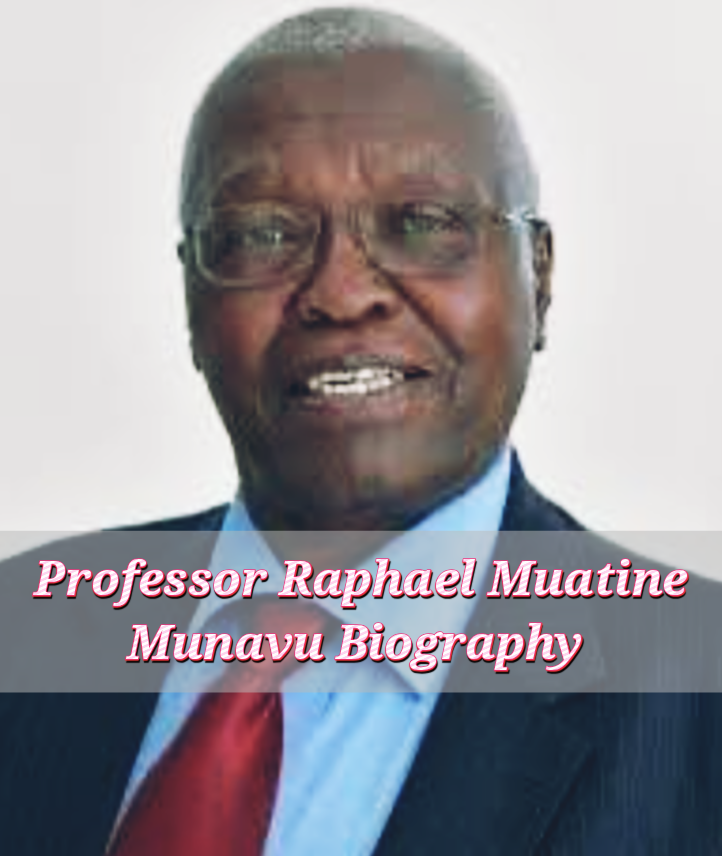
Professor Raphael Muatine Munavu Biography
Professor Raphael Muatine Munavu was a distinguished Kenyan academic, scientist, and education reformer whose contributions shaped higher education, scientific research, and national policy in Kenya for over four decades. Born in Kangundo, Machakos County, Kenya, he rose to become one of the country’s most respected scholars and administrators. As a Kenyan national, Professor Munavu dedicated his life to building strong academic institutions and advancing education reforms that benefited generations of students and the nation as a whole. His work as a professor of chemistry, university leader, and chairperson of key national bodies left a lasting mark on Kenya’s development in science, technology, and learning.
Through quiet leadership and deep commitment, Professor Munavu influenced policies that modernized Kenya’s education system. He served in top roles at major universities and guided national examinations and reforms, always emphasizing excellence, integrity, and the power of education to drive progress. His passing on April 26, 2026, prompted tributes from leaders across Kenya, including President William Ruto, who remembered him as a former lecturer and mentor. Professor Munavu’s legacy continues through the institutions he strengthened and the reforms he championed.
Early Life and Background
Professor Raphael Muatine Munavu was born circa 1948 in Kangundo, Machakos County, Kenya. He grew up in the Kamba community during the early years of Kenya’s independence, a time of great hope and change. As the eldest child in his family, he learned the values of discipline, hard work, and community service that guided him throughout his life. His early environment in a rural setting near Machakos encouraged curiosity and a strong belief in education as a path to personal and national growth.
Young Raphael attended local schools, including Misyani School in 1952 under the Kenya African Primary Education system. He later studied at Tala Boys and joined the prestigious Mang’u High School in 1962. These formative experiences built his academic foundation and passion for science. Growing up in post-colonial Kenya, he witnessed the importance of skilled professionals in building the new nation. This period shaped his lifelong view that education could transform lives and strengthen society. He carried these lessons forward, always staying connected to his Kamba roots and traditions while pursuing opportunities abroad.
Education
Professor Munavu’s educational path took him from Kenya to the United States, where he gained world-class training in chemistry. He earned his Bachelor of Arts degree from Kalamazoo College between 1967 and 1970. He then pursued a Master of Science at Wayne State University, completing it in 1972. In 1975, he received his Doctor of Philosophy in chemistry from the University of Detroit. His studies focused on organic chemistry, with strong interests in environmental and industrial applications.
This international education exposed him to advanced research methods and global standards. He returned to Kenya in the mid-1970s ready to apply his knowledge at home. The rigorous training he received abroad equipped him to contribute meaningfully to Kenyan academia and to mentor future scientists. His academic qualifications later earned him recognition, including honorary doctorates from Kalamazoo College in 2000 and Laikipia University in 2013.
Career
Professor Munavu began his professional journey as a lecturer in the Department of Chemistry at the University of Nairobi in the mid-1970s. He quickly established himself as a dedicated teacher and researcher. Over time, he advanced to become Dean of the Faculty of Science from 1987 to 1990. In this role, he supported the growth of scientific programs and encouraged collaboration across disciplines.
His leadership expanded when he served as Founding Principal of Laikipia College, which was then part of Egerton University, from 1990 to 1992. He went on to hold the position of Deputy Vice-Chancellor for Administration and Finance at Egerton University from 1992 to 1994. He returned to the University of Nairobi in the same capacity from 1994 to 1998, helping manage university operations and finances during a period of growth. In 1998, he was appointed Vice-Chancellor of Moi University, serving until 2002. Under his guidance, the university expanded academic programs and aligned them with national development needs.
Beyond university administration, Professor Munavu played vital national roles. He chaired the Kenya National Examinations Council from 2000 to 2010, ensuring fair and credible assessment systems for Kenyan students. He also led the Kenya National Academy of Sciences as chairman for nearly two decades, from 2002 to 2021, promoting scientific research and policy advice. In addition, he served as Chancellor of Laikipia University from 2013 to 2018 and held positions on boards such as the Konza Technopolis Development Authority.
One of his most notable contributions came in 2022 when he was appointed to chair the Presidential Working Party on Education Reforms. In this capacity, he led wide consultations and developed recommendations to strengthen the Competency-Based Curriculum. His team’s work helped guide Kenya toward a more practical and inclusive education system. Throughout his career, Professor Munavu published more than ninety refereed and commissioned research papers on topics including natural products, organic synthesis, environmental chemistry, and the role of science and technology in socioeconomic development. He also supervised twenty-one postgraduate students, many of whom became leaders in their fields.
His expertise in chemistry focused on practical applications that addressed Kenya’s environmental and industrial challenges. As Professor Emeritus in the Department of Chemistry at the University of Nairobi, he continued to offer guidance even after formal retirement. Professor Munavu received several national honors for his service, including the Elder of the Burning Spear and the Order of the Grand Warrior. These awards recognized his outstanding contributions to education and public service.
Personal Life
Professor Raphael Muatine Munavu maintained a private personal life away from public attention. He was a devout Christian and remained deeply connected to his Kamba heritage and traditions. Family and friends described him as a humble, principled, and disciplined man who valued integrity and quiet service. While specific details about his spouse and children are not publicly disclosed, he is remembered fondly by his family as a supportive and respected figure. He balanced his demanding career with a strong sense of community responsibility, often mentoring young people in Machakos and beyond. His life reflected a commitment to both professional excellence and personal values rooted in his upbringing.
Recent News
In late April 2026, Kenya received the sad news of Professor Munavu’s passing. He died on April 26, 2026, while receiving treatment at a hospital in Nairobi. His family confirmed the news, and the announcement quickly spread across academic and government circles. Tributes poured in from leaders, colleagues, and former students who praised his lifetime of service.
President William Ruto, whom Professor Munavu had taught at the University of Nairobi, expressed deep condolences and highlighted his former lecturer’s role in shaping education policy. Other prominent figures, including former Deputy President Rigathi Gachagua and officials from Moi University and the University of Nairobi, described him as a visionary leader and national icon. Universities he served issued statements mourning the loss and celebrating his transformative impact. The education sector recognized his final major assignment chairing the education reforms working party as a fitting capstone to a remarkable career. Discussions about his legacy continue, with many calling for continued implementation of the reforms he helped design.
Conclusion
Professor Raphael Muatine Munavu lived a life defined by dedication to knowledge, leadership, and national progress. From his early days in Kangundo to his influential roles in Kenya’s universities and policy circles, he consistently worked to strengthen education and science. His contributions improved academic standards, supported fair examinations, and guided curriculum reforms that will benefit future generations. Though he has passed on, his vision for a stronger, more equitable education system remains alive in the institutions and policies he helped build. Professor Munavu will be remembered as a humble scholar whose quiet determination left Kenya better prepared for the future.
FAQs
Who was Professor Raphael Muatine Munavu?
Professor Raphael Muatine Munavu was a Kenyan professor of chemistry, university administrator, and education reformer who served in senior leadership positions at several Kenyan universities and chaired national bodies including the Kenya National Examinations Council and the Presidential Working Party on Education Reforms.
Where and when was he born?
He was born circa 1948 in Kangundo, Machakos County, Kenya.
What were his main areas of academic expertise?
His work centered on organic chemistry, natural products, environmental chemistry, and industrial chemistry. He published over ninety research papers in these fields.
What major leadership roles did he hold?
He served as Vice-Chancellor of Moi University, Deputy Vice-Chancellor at both Egerton University and the University of Nairobi, Dean of the Faculty of Science at the University of Nairobi, Chairman of the Kenya National Examinations Council, and Chairman of the Presidential Working Party on Education Reforms.
Did he receive any national honors?
Yes, he was awarded the Elder of the Burning Spear and the Order of the Grand Warrior, along with honorary doctorates from Kalamazoo College and Laikipia University.
When did Professor Munavu pass away?
He passed away on April 26, 2026, while receiving medical treatment in Nairobi.
What was his contribution to Kenya’s education system?
He played a key role in expanding university programs, ensuring credible national examinations, and leading the 2022 education reforms that advanced the Competency-Based Curriculum.