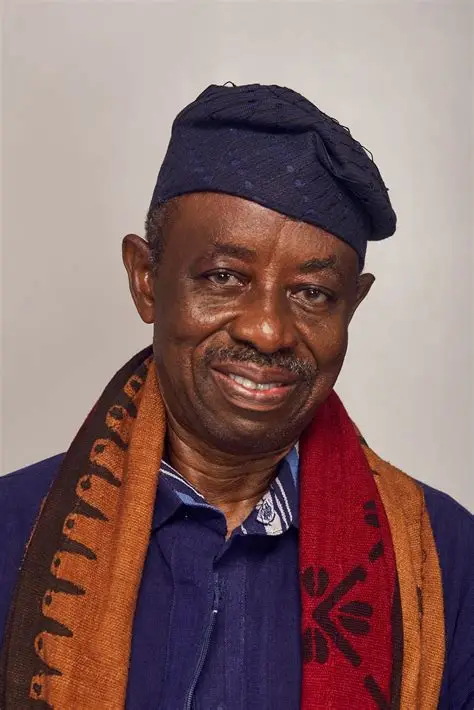
Tunde Kelani is one of Nigeria’s most respected filmmakers, cinematographers and directors, with a career spanning several generations of Nigerian cinema. Popularly known as TK, he has built a reputation for telling stories rooted in Yoruba culture, Nigerian literature, history and contemporary social issues. His work as a cinematographer, director and producer has made him an important figure in the development of Nigerian filmmaking.
Kelani is also attracting fresh attention in 2026 following the announcement of Opalaba, a Yoruba-language satirical micro-web series. The project represents another stage in a career that has moved from traditional film and television production to modern digital storytelling. For NollySearch, his story is particularly important because it shows how one filmmaker helped connect Yoruba storytelling with the wider Nigerian film industry.
Early Life and Education
Tunde Kelani was born in Lagos in February 1948 but grew up in Abeokuta, Ogun State. His upbringing exposed him to Yoruba culture, language, literature and traditional theatre, experiences that later became important influences on his filmmaking career. He developed an early interest in photography and visual storytelling before pursuing filmmaking professionally.
Kelani later travelled to the United Kingdom to study filmmaking at the London International Film School. His training gave him technical knowledge in cinematography and film production, which became the foundation for his early professional work. After returning to Nigeria, he began applying his international training to Nigerian productions while remaining deeply connected to local stories and culture.
How Tunde Kelani Started His Film Career
Kelani began his career primarily as a cinematographer before becoming widely recognized as a director. During the 1970s, he worked with Nigerian television and international media organizations, gaining valuable experience in photography, camera work and visual storytelling. He subsequently worked as a cinematographer on several Nigerian productions.
His early filmmaking experience included work connected to productions such as Anikura, Ogun Ajaye, Iya Ni Wura, Taxi Driver and Iwa. Working behind the camera allowed Kelani to develop a strong understanding of the technical side of filmmaking before he eventually moved further into directing and producing.
Tunde Kelani and Mainframe
A major turning point in Kelani’s career came with the establishment of Mainframe Film and Television Productions. Through Mainframe, he developed films that combined strong visual storytelling with Nigerian literature, Yoruba culture and social commentary. The production company became closely associated with the type of culturally grounded cinema that would define his career.
Kelani’s approach was different from simply making films for entertainment. His productions frequently explored political leadership, corruption, morality, tradition, social responsibility and the relationship between individuals and their communities. At the same time, he used humour, Yoruba language and familiar cultural settings to make these themes accessible to audiences.
Tunde Kelani’s Major Movies
Tunde Kelani has directed, produced or worked on numerous Nigerian productions throughout his career. Some of the major films associated with his name include Ti Oluwa Nile, Ayo Ni Mo Fe, Koseegbe, Oleku, Saworoide, Agogo Eewo, Arugba, Dazzling Mirage, Maami and Ayinla.
Among these, Saworoide remains one of his most recognized films. The 1999 Yoruba political drama used traditional storytelling and symbolism to examine leadership, power and accountability. Its ability to connect Yoruba cultural traditions with wider Nigerian political issues became one of the clearest examples of Kelani’s filmmaking approach.
His later films continued to explore Nigerian identity and social issues. Dazzling Mirage, for example, addressed sickle cell disease and discrimination, while Maami explored family, childhood and personal history. Ayinla focused on the life and music of Yoruba Apala musician Ayinla Omowura, further demonstrating Kelani’s interest in preserving Nigerian cultural stories through film.
Tunde Kelani and Yoruba Cinema
Yoruba culture is central to much of Kelani’s work. His films frequently use Yoruba language, traditions, literature, humour, music and social institutions as important parts of their storytelling rather than simply using them as background.
This commitment has made Kelani an important figure in Yoruba cinema and Nigerian cultural filmmaking. His work demonstrates that stories told in indigenous languages can explore complex themes while still reaching audiences beyond their immediate cultural setting.
His connection to Nigerian literature is also significant. Kelani has adapted literary and theatrical works for the screen, helping create a bridge between Nigerian writers, performers and filmmakers. This has contributed to the continued visibility of Nigerian stories in cinema.
Tunde Kelani’s Influence on Nigerian Filmmaking
Kelani’s influence extends beyond his own movies. His long career has provided opportunities for actors, writers, cinematographers and other professionals, while his filmmaking philosophy has influenced younger Nigerian creatives.
His work also represents a connection between different eras of Nigerian cinema. He began working when television, theatre and traditional film production played major roles in the industry and has remained active during the rise of digital filmmaking and streaming platforms.
His career demonstrates that a filmmaker can preserve cultural identity while adapting to technological and audience changes. That balance has helped make him one of the most respected veteran figures in Nigerian cinema.
Tunde Kelani’s Latest Project, Opalaba
Tunde Kelani is entering another phase of his career with Opalaba, a Yoruba-language satirical micro-web series inspired by Yoruba culture and contemporary African life. Production is expected to begin before the end of August 2026, bringing his storytelling into a format designed for the modern digital audience.
The project is significant because it combines Kelani’s long-standing interest in Yoruba storytelling with a newer form of entertainment distribution. Rather than simply repeating the filmmaking methods associated with his earlier career, he is exploring another way to present culturally rooted stories to audiences.
Opalaba therefore adds a contemporary chapter to a filmmaking career that has already lasted for decades. It also shows that Kelani’s interest in Yoruba culture and Nigerian storytelling remains relevant even as the country’s entertainment industry continues to change.
Read More: Who Is Taiwo Hassan (Ogogo)? Biography, Age, Movies, Career and Family
Frequently Asked Questions About Tunde Kelani
Who is Tunde Kelani?
Tunde Kelani is a veteran Nigerian filmmaker, director, cinematographer and producer. He is particularly known for films that explore Yoruba culture, Nigerian literature and social issues.
How old is Tunde Kelani?
Tunde Kelani was born in February 1948. He is 78 years old in 2026.
Where is Tunde Kelani from?
He was born in Lagos and grew up in Abeokuta, Ogun State. His upbringing in Abeokuta strongly influenced his connection to Yoruba culture and storytelling.
What are Tunde Kelani’s most popular movies?
Some of his best-known films include Ti Oluwa Nile, Saworoide, Agogo Eewo, Dazzling Mirage, Maami and Ayinla.
What did Tunde Kelani study?
He studied filmmaking at the London International Film School. His training helped develop the cinematography and filmmaking skills that became central to his career.
What is Tunde Kelani known for?
He is known for directing and producing culturally grounded Nigerian films, particularly Yoruba-language productions that explore politics, society, history, literature and everyday life.
What is Tunde Kelani’s latest project?
His latest announced project is Opalaba, a Yoruba-language satirical micro-web series inspired by Yoruba culture and contemporary African life.
Conclusion
Tunde Kelani’s career represents an important part of the development of Nigerian cinema. From his early work as a cinematographer to his success as a director and producer, he has consistently used film to tell stories connected to Yoruba culture, Nigerian literature and contemporary society.
Movies such as Saworoide, Ti Oluwa Nile, Agogo Eewo, Dazzling Mirage, Maami and Ayinla have established his place among Nigeria’s most respected veteran filmmakers. With Opalaba, Kelani continues to explore new ways of telling Nigerian stories while remaining connected to the cultural foundation that has defined his career.