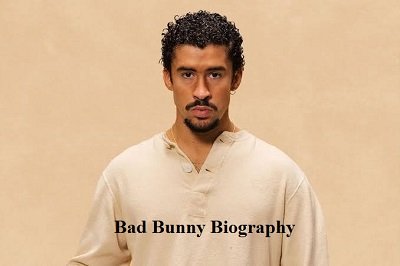
Bad Bunny biography: Some artists chase global fame by softening who they are to fit a wider audience, and then there is Bad Bunny, who did the exact opposite and somehow became one of the biggest names in music anyway. He never switched to English, never toned down his Puerto Rican identity, and never stopped talking about home, and audiences around the world showed up for him regardless. This is the story of how he got there.
Bad Bunny Age and Early Life
Benito Antonio Martínez Ocasio, known to the world as Bad Bunny, was born on March 10, 1994, in Bayamón, Puerto Rico, which makes him 32 years old as of 2026. He grew up in Vega Baja, a working class coastal town on the island, in a close knit, devoutly Catholic household. By his own account, he was never the kid drawn to trouble in the streets and much preferred staying close to home with his family.
His earliest musical memory traces back to age five, when he received the record Aquel Que Había Muerto by Puerto Rican reggaeton pioneer Vico C as a Christmas gift. He sang in his church choir weekly until he was thirteen, an experience he has credited with building both his musical foundation and his confidence performing in front of people. After leaving the choir, his musical taste expanded toward the artists he heard on the radio, particularly Daddy Yankee and salsa legend Héctor Lavoe, both of whom would go on to shape his sound and stage presence for years to come. His now famous stage name, somewhat amusingly, came from a childhood memory of being forced to wear a bunny costume and being thoroughly annoyed about it.
How Bad Bunny Got Discovered
Bad Bunny’s rise did not follow the traditional industry playbook at all. He began uploading music to SoundCloud with no label, no marketing budget, and no polished image, relying purely on the strength of his raw voice and unconventional sound. In 2016, his song Diles caught real attention online, which led to a contract with the label Hear This Music.
From there, things accelerated quickly. His feature on Cardi B and J Balvin’s I Like It became a global hit, reaching number one on the Billboard Hot 100 in 2018, and his collaboration with Drake on Mía further cemented his name among English speaking audiences who had likely never streamed a Spanish language track before.
| Category | Details |
|---|---|
| Full name | Benito Antonio Martínez Ocasio |
| Born | March 10, 1994, Bayamón, Puerto Rico |
| Age | 32 (as of 2026) |
| Hometown | Vega Baja, Puerto Rico |
| Breakthrough | “Diles” (2016), then “I Like It” with Cardi B and J Balvin (2018) |
| Studio albums | X 100pre, YHLQMDLG, El Último Tour del Mundo, Un Verano Sin Ti, Nadie Sabe Lo Que Va a Pasar Mañana, Debí Tirar Más Fotos |
| Grammy history | First Spanish-language Album of the Year winner (2026, Debí Tirar Más Fotos) |
| Super Bowl | First solo Latino headliner, Super Bowl LX halftime show (Feb 2026) |
| Acting credits | Bullet Train, Cassandro, Happy Gilmore 2, Caught Stealing |
| Net worth | Estimated in the hundreds of millions (2026) |
Bad Bunny Albums and Music Career
Early Breakthroughs
Bad Bunny released his debut studio album, X 100pre, in 2018, followed by a joint album with J Balvin called Oasis in 2019. His sophomore solo record, YHLQMDLG, arrived in 2020 and reached number two on the Billboard 200, going on to win the Grammy for Best Latin Pop or Urban Album.
El Último Tour del Mundo
Later in 2020, Bad Bunny released El Último Tour del Mundo, which made history as the first entirely Spanish language album to top the US Billboard 200. Its lead single, Dakiti, topped the Billboard Global 200, further proving that language was no longer a barrier to chart dominance for an artist with the right sound and following.
Un Verano Sin Ti
In 2022, Bad Bunny released Un Verano Sin Ti, which became the most successful album of the year globally according to the International Federation of the Phonographic Industry. The album spent thirteen weeks atop the all genre Billboard 200 chart and made history again at the Grammys, becoming the first Spanish language album ever nominated for Album of the Year. He lost that year to Harry Styles, but the nomination alone marked a major shift in how the industry viewed Latin music.
Nadie Sabe Lo Que Va a Pasar Mañana
His fifth studio album, Nadie Sabe Lo Que Va a Pasar Mañana, released in 2023, topped both pop and Latin music charts and earned him another Grammy nomination for Best Música Urbana Album, with the top five single Monaco helping drive its success.
Debí Tirar Más Fotos
In January 2025, Bad Bunny released his sixth studio album, Debí Tirar Más Fotos, which translates to I Should Have Taken More Photos. The record stands as a deeply personal tribute to Puerto Rico, directly addressing the island’s political struggles while celebrating its culture and identity. It spent four weeks at number one on the Billboard 200, and singles DTMF and Baile Inolvidable both broke into the Hot 100 top five.
The album went on to lead the Latin Grammy nominations with twelve nods and won Album of the Year at that ceremony. Then, in February 2026, it made history again at the Grammy Awards, becoming the first entirely Spanish language album ever to win Album of the Year, alongside wins for Best Música Urbana Album and Best Global Music Performance. Reports from the ceremony describe Bad Bunny as so overwhelmed in the moment that he remained seated for nearly half a minute before getting up to accept the award.
Bad Bunny’s Historic Super Bowl Halftime Performance
In September 2025, it was announced that Bad Bunny would headline the Super Bowl LX halftime show in February 2026, making him the first solo Latino artist ever to do so. In a statement released through the NFL, he described the moment as something bigger than himself, dedicating it to those who came before him and to his culture and history.
The announcement was not without controversy. The decision drew public criticism from some political figures, including comments from then sitting officials calling the choice questionable, while others, including producer Jay-Z and NFL Commissioner Roger Goodell, publicly defended the selection. When the performance took place, it became the first Super Bowl halftime show ever delivered primarily in Spanish, featuring guest appearances from Ricky Martin, Lady Gaga, and the salsa band Los Sobrinos, along with references to Puerto Rican history and the island’s independence movement woven throughout the show. Following the performance, four of his songs re-entered the Billboard Hot 100, with DTMF cracking back into the top ten.
Bad Bunny’s Acting Career
Beyond music, Bad Bunny has steadily built a presence in film and television. He appeared in the series Narcos: Mexico in 2021, took on a supporting role in the action comedy Bullet Train in 2022, and starred in the biographical drama Cassandro in 2023. More recently, he appeared in Happy Gilmore 2 and the thriller Caught Stealing, both released in 2025, signaling that his ambitions extend well beyond the recording studio.
Bad Bunny’s Activism and Public Statements
Bad Bunny has used his platform consistently to speak about issues affecting Puerto Rico and immigrant communities. Following the devastation of Hurricane Maria, he released the song Estamos Bien to capture the resilience of his homeland, and later used a television appearance to remind viewers that many Puerto Rican households remained without power a full year after the storm.
He has also been notably outspoken regarding United States immigration enforcement. He chose to exclude the continental United States entirely from his 2025 to 2026 world tour, citing concerns that immigration authorities could target concertgoers at his shows. At the 2026 Grammy Awards, while accepting the award for Best Música Urbana Album, he opened his acceptance speech with a direct call for immigration enforcement agencies to leave communities alone, drawing a standing ovation from the audience, before going on to win Album of the Year later that same night. Public reaction to his remarks has been mixed, with supporters praising his willingness to use his platform and critics arguing entertainers should stay out of political commentary, reflecting the broader and ongoing debate around celebrity activism in general. Bad Bunny biography.
Bad Bunny Streaming Records and Achievements
Bad Bunny holds the distinction of being the first non English language artist to become Spotify‘s most streamed artist of the year, a feat he achieved three consecutive years running from 2020 to 2022. His album Un Verano Sin Ti also holds the record as the most streamed album in Spotify’s history. He has worked with an impressive range of collaborators over the years, including Drake, Travis Scott, The Weeknd, Dua Lipa, Becky G, and Rosalía, further cementing his status as one of the most in demand artists across genres.
Bad Bunny Net Worth in 2026
While exact figures vary depending on the source, Bad Bunny’s net worth is widely estimated to be in the hundreds of millions of dollars as of 2026, driven by record breaking album sales, sold out world tours, acting roles, and an expanding portfolio of brand partnerships. His continued chart dominance and crossover success across music and film suggest that figure is likely to keep climbing in the years ahead.
Frequently Asked Questions
How old is Bad Bunny? He was born on March 10, 1994, making him 32 years old as of 2026.
What is Bad Bunny’s real name? His full name is Benito Antonio Martínez Ocasio.
How many Grammy Awards has Bad Bunny won? He has won multiple Grammy Awards, including Album of the Year in 2026 for Debí Tirar Más Fotos, the first Spanish language album ever to win that category.
Did Bad Bunny perform at the Super Bowl? Yes, he headlined the Super Bowl LX halftime show in February 2026, becoming the first solo Latino artist to do so and delivering the first halftime show performed primarily in Spanish.
Is Bad Bunny an actor as well as a musician? Yes, he has appeared in projects including Bullet Train, Cassandro, Happy Gilmore 2, and Caught Stealing.
Where is Bad Bunny from? He was born in Bayamón, Puerto Rico, and grew up in the nearby town of Vega Baja.
Conclusion
Bad Bunny’s career is proof that authenticity, not assimilation, can be the real engine behind global stardom. From uploading songs to SoundCloud with no label backing him to headlining the Super Bowl in his own language and winning the music industry’s biggest award for an album rooted entirely in his homeland’s identity, his story has consistently rewritten what crossover success in music looks like. With his influence still expanding across film, fashion, and culture, it is clear that Bad Bunny’s story is far from finished.