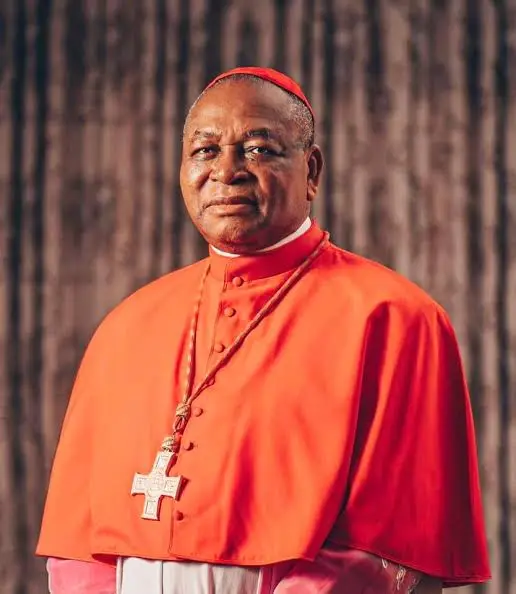
Cardinal John Onaiyekan has spent more than half a century as one of the most respected voices in Nigerian religious life, and even years after stepping down as Archbishop of Abuja, he’s still very much in the national conversation. Right now, that’s because of a public back and forth with the Nigerian Presidency over comments he made following a private meeting between Catholic bishops and President Bola Tinubu.
Here’s a full look at who Cardinal Onaiyekan is, the career that built his reputation, and what’s currently playing out between him and the government.
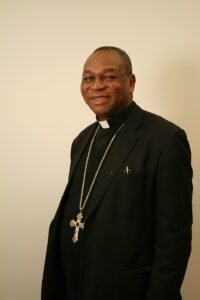
Who Is Cardinal John Onaiyekan?
John Olorunfemi Onaiyekan is a Nigerian Catholic prelate who served as Archbishop of Abuja from 1994 until his retirement in 2019, and who was elevated to Cardinal by Pope Benedict XVI in 2012. He now holds the title Archbishop Emeritus of Abuja and remains a senior, widely respected figure within the Catholic Bishops’ Conference of Nigeria, known by its acronym CBCN.
Over the decades, he’s built a reputation as one of Nigeria’s most outspoken religious leaders on matters of governance, security, and interfaith relations, a reputation that’s very much on display in his current exchange with the Presidency.
How Old Is Cardinal Onaiyekan?
Onaiyekan was born on January 29, 1944, in Kabba, in what is now Kogi State, Nigeria. That makes him 82 years old as of 2026.
Early Life and Education
Onaiyekan was born to Bartholomew and Joann Onaiyekan and began his early education at St. Mary’s Catholic School in Kabba between 1949 and 1956. He went on to Mount St. Michael’s Secondary School in Aliade, Benue State, where he reportedly set academic records that stood for years afterward.
He entered priestly formation in 1963 at Sts. Peter and Paul Major Seminary in Bodija, Ibadan, before moving to Rome in 1965 to continue his studies at the Pontifical Urban College of Propaganda Fide. He was ordained a priest on August 3, 1969, at his hometown of Kabba. He went on to earn advanced degrees in Sacred Scripture and Biblical Theology, giving him a strong academic foundation alongside his pastoral work.
Rise Through the Church
Onaiyekan’s path through the Catholic hierarchy in Nigeria moved steadily over the following decades. He was consecrated as a bishop in January 1983 and served as Auxiliary Bishop of Ilorin before becoming Bishop of Ilorin outright in 1984. In 1990, he was appointed Coadjutor Bishop of Abuja, and became Bishop of Abuja in 1992.
When Pope John Paul II elevated Abuja to a Metropolitan Archdiocese in March 1994, Onaiyekan became its first Archbishop, a position he would hold for the next 25 years. During that time, he also served as President of the Catholic Bishops’ Conference of Nigeria from 1999 to 2006, and held leadership roles in a number of regional and international Catholic bodies, including the Symposium of Episcopal Conferences of Africa and Madagascar.
He welcomed Pope John Paul II during his 1998 apostolic visit to Nigeria and played an active role in interfaith dialogue throughout his career, including serving as President of the Christian Association of Nigeria and working closely with Muslim leaders on peacebuilding efforts, work that would later earn him significant international recognition.
Becoming a Cardinal
On November 24, 2012, Pope Benedict XVI created Onaiyekan a cardinal, assigning him the titular church of San Saturnino in Rome. The honor reflected both his standing within the Nigerian church and his broader influence across African Catholicism.
That same year, he was named Pax Christi International’s Peace Laureate and received a nomination for the Nobel Peace Prize, largely in recognition of his interfaith and peacebuilding work in a country that has long grappled with religious tension between its Christian and Muslim populations.
Retirement as Archbishop
Pope Francis accepted Onaiyekan’s resignation as Archbishop of Abuja on November 9, 2019, when he was 75 years old, the standard retirement age for bishops in the Catholic Church. He was succeeded by Archbishop Ignatius Ayau Kaigama, who had served as his coadjutor. Even after stepping down, Onaiyekan retained the title of Archbishop Emeritus and has continued to be an active, visible voice in Nigerian public life.
Current Controversy With the Nigerian Presidency
Onaiyekan is back in the headlines this week over comments he made following a private meeting between the Catholic Bishops’ Conference of Nigeria and President Bola Tinubu at the State House in Abuja on July 28, 2026. During that meeting, the bishops presented the President with their concerns about the country’s economy, insecurity, the state of democracy, and what they described as a “creeping danger” of one-party dominance ahead of the 2027 elections.
Following the meeting, Onaiyekan gave an interview to ARISE News describing his own account of what was discussed, including his impression that President Tinubu disagreed with the bishops’ assessment. The Presidency responded sharply. Presidential Adviser Temitope Ajayi published a statement titled “Cardinal Onaiyekan’s Abuse of Clerical Privilege,” arguing it was inappropriate for Onaiyekan to publicly characterize a private meeting, and pushing back on the substance of the bishops’ concerns, noting that Tinubu had addressed each point raised, including the bishops’ call for the return of mission schools to church ownership.
Onaiyekan, for his part, has declined to escalate the exchange. Speaking on Eagle 102.5 FM in Ogun State, he said the bishops’ conference had said what it needed to say and was now simply watching to see whether their concerns translate into improved governance, adding that the CBCN had no interest in trading public statements with government spokespersons.
The dispute has drawn reaction well beyond the Church. Opposition figure Atiku Abubakar has called for an apology to the cardinal and Catholic faithful, the Northern Christian Association has voiced support for the bishops, and the Human Rights Writers Association of Nigeria has criticized the Presidency’s response as intolerant of dissent. Other commentators, including some sympathetic to the government, have argued Onaiyekan should not have discussed the details of a closed-door meeting publicly. As of early August 2026, the back and forth between the cleric and the Presidency continues, with both sides holding their positions.
Legacy
Regardless of how the current dispute plays out, Onaiyekan’s decades of work leading the Archdiocese of Abuja and engaging in interfaith dialogue have left a lasting mark on Nigerian religious and public life. He’s widely regarded as one of the most consistent voices calling for accountability from Nigeria’s political leadership, a role he’s clearly continuing to play well into his eighties.
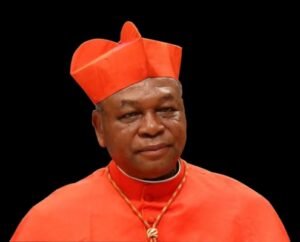
Cardinal John Onaiyekan’s career reflects a rare combination of theological depth and public engagement, from decades leading one of Nigeria’s most prominent archdioceses to his ongoing willingness to speak candidly about the state of the country. His current dispute with the Presidency is just the latest chapter in a long pattern of him speaking directly, whether or not it’s welcomed by those in power.
Frequently Asked Questions
1. How old is Cardinal John Onaiyekan? He was born on January 29, 1944, making him 82 years old as of 2026.
2. What position did Cardinal Onaiyekan hold in the Catholic Church? He served as Archbishop of Abuja from 1994 to 2019 and was made a cardinal by Pope Benedict XVI in 2012. He currently holds the title Archbishop Emeritus of Abuja.
3. Is Cardinal Onaiyekan still active in the Church? Yes. While he retired as Archbishop in 2019, he remains an active and respected voice within the Catholic Bishops’ Conference of Nigeria.
4. What is the current controversy involving Cardinal Onaiyekan? He gave a television interview discussing a private meeting between Catholic bishops and President Bola Tinubu, which the Presidency criticized as an inappropriate breach of confidentiality. Onaiyekan has defended the bishops’ right to speak publicly about their concerns.
5. What did the bishops discuss with President Tinubu? According to reports, the Catholic Bishops’ Conference of Nigeria raised concerns about the economy, insecurity, education policy, and the state of democracy ahead of the 2027 elections.
6. How has the Nigerian public reacted to the dispute? Reaction has been mixed. Opposition figures and some civil society groups have backed Cardinal Onaiyekan, while the Presidency and some of its supporters have defended their criticism of his remarks.
7. Where was Cardinal Onaiyekan born? He was born in Kabba, in present-day Kogi State, Nigeria.
8. Why was Cardinal Onaiyekan considered for the Nobel Peace Prize? He was nominated in 2012 in recognition of his interfaith dialogue and peacebuilding work in Nigeria, alongside being named Pax Christi International’s Peace Laureate that same year.
9. Who succeeded Onaiyekan as Archbishop of Abuja? Archbishop Ignatius Ayau Kaigama succeeded him in November 2019.
10. What is Cardinal Onaiyekan known for beyond his church leadership? He’s widely known for his work in interfaith dialogue between Nigeria’s Christian and Muslim communities, and for regularly speaking out on governance and security issues affecting the country.