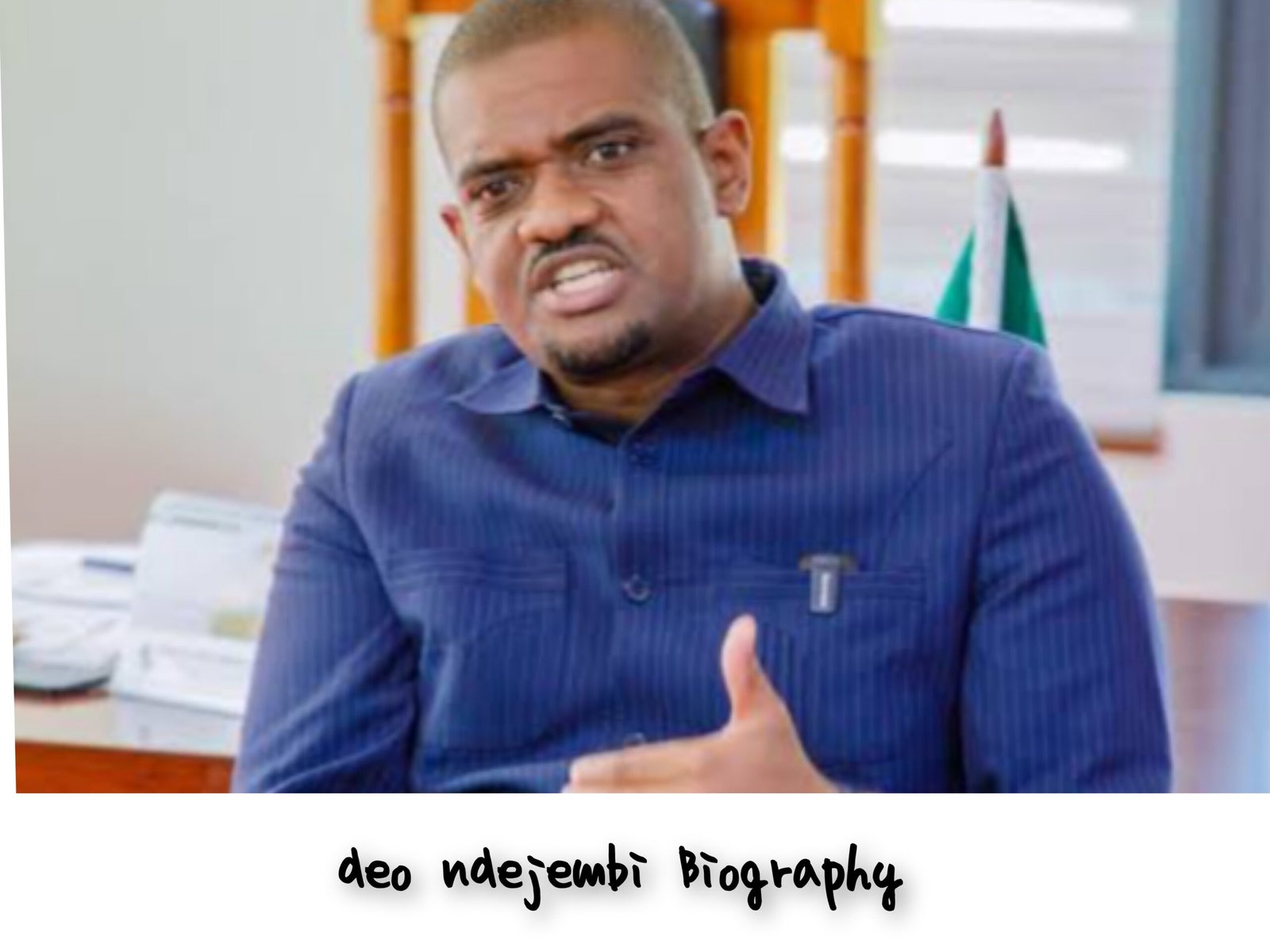
Deo Ndejembi Biography
Deogratius John Ndejembi is a Tanzanian politician who has moved from private business roles into high public office. Many people know him by the shorter name Deo Ndejembi. As of late August 2026 he serves as Minister of Energy and stands as the nominee of the ruling Chama Cha Mapinduzi party for the position of Vice President of Tanzania. His nomination came after the resignation of the previous Vice President, Dr Emmanuel Nchimbi. If confirmed by the National Assembly, Ndejembi would become the thirteenth person to hold the office since the country gained independence.
This article presents a clear account of his life based on available public records. It covers his early years, schooling, work history, and the steps that brought him to national attention. The goal is to give readers a factual picture of how one person advanced through party structures, local government, Parliament, and cabinet posts. Readers will find simple explanations of each stage so that the path is easy to follow. The information draws from parliamentary records, official announcements, and contemporary reports published up to 27 August 2026.
Understanding the background of public figures helps citizens follow current events with greater clarity. Ndejembi’s story shows a combination of formal education, private sector experience, and long involvement in party youth and local leadership. The sections that follow present these elements in order.
Deo Ndejembi Early Life
Deogratius John Ndejembi was born on 12 July 1983 in the Dodoma region of Tanzania. At the time of his nomination for the vice presidency in August 2026 he was forty three years old. Dodoma is the capital region of the country and has long held importance in national administration and politics. Growing up in this area placed him near the centre of government activity from an early age.
Public records provide limited detail about his family background. Available sources focus on his schooling and later career rather than private family matters. What is known is that he began formal education in the late 1980s while Tanzania continued to develop its public systems after independence. Children of that period attended local primary schools that prepared them for secondary studies and national examinations.
His early years coincided with important changes in the country. The ruling party Chama Cha Mapinduzi remained central to political life. Many young people who later entered public service first joined party youth structures. Ndejembi’s later membership in the party youth organisation suggests that community and party activities formed part of the environment around him as he grew up.
Primary school attendance started in 1988 and continued until 1995. These years cover the standard period of basic education in Tanzania. Pupils learn reading, writing, arithmetic, and civic knowledge. Completing primary school opens the door to secondary education. Ndejembi’s record shows steady progress through this stage without interruption noted in public documents.
After primary school he moved into secondary education. The transition from primary to secondary often involves national examinations that determine placement. His secondary studies took place in the late 1990s and early 2000s. This period prepared him for advanced secondary work and eventual university entry. The combination of local schooling and later overseas study became a feature of his educational path.
Living in the Dodoma region also meant exposure to administrative work. District and regional offices operate there. Young people who observe local government sometimes develop interest in public service. Ndejembi’s later appointment as a District Commissioner in the same region indicates that his early surroundings may have influenced his direction, though specific personal statements on this point are not publicly recorded.
By the time he finished secondary school he had reached the early twenties. The next phase of his life involved higher education abroad and then entry into the private sector. These early years established the foundation of formal learning and regional knowledge that supported later roles.
Deo Ndejembi Education
Education forms a clear and documented part of Ndejembi’s background. Parliamentary records list the schools and institutions he attended along with the years of study and the awards received.
He began at Cannon Andrea Mwaka Primary School. Studies there ran from 1988 to 1995. He completed the Certificate of Primary Education Examination. This certificate marks the end of primary level and allows entry to secondary school.
Secondary education followed. Records show attendance at Kigurunyembe Secondary School and also reference to Jamhuri Secondary School in the mid to late 1990s. He obtained the Certificate of Secondary Education Examination. After ordinary secondary level he continued to advanced secondary studies at Merton College from 2002 to 2004. There he earned the Advanced Certificate of Secondary Education Examination. These certificates are standard Tanzanian qualifications that prepare students for university or further professional training.
Higher education took place outside Tanzania. From 2006 to 2009 he studied at the University of Lincoln in the United Kingdom. He completed a Bachelor’s degree in International Relations. International Relations covers the study of how countries interact, the work of international organisations, and issues of diplomacy and global affairs. Graduates often enter government, diplomacy, or organisations that deal with cross border matters.
After the bachelor’s degree he pursued further professional training. Between 2009 and 2012 he obtained an Advanced Diploma from the Institute of Administrative Management. This diploma focuses on management skills, public administration principles, and organisational leadership. Such training is useful for people who later work in government offices or large organisations.
Later records list postgraduate studies at the University of Cumbria. Sources indicate a Master’s degree completed around 2021. The exact field is not always specified in every public summary, yet the addition of a master’s level qualification shows continued formal learning after he had already entered public roles.
The sequence of education is therefore primary school, ordinary and advanced secondary certificates, a bachelor’s degree in International Relations from a British university, an advanced diploma in administrative management, and a master’s level qualification. This combination gives both theoretical knowledge of international affairs and practical management skills. In Tanzanian public service, officers with overseas degrees and administrative diplomas often move into planning, policy, or senior administrative posts. Ndejembi’s educational record matches this pattern and appears in official parliamentary profiles as the basis for his later appointments.
Deo Ndejembi Personal Life
Public information about the personal life of Deogratius John Ndejembi remains limited. Official biographies and parliamentary records concentrate on education, party positions, and government service. They do not provide details about marital status, children, or private family activities.
As a public figure holding ministerial office and later nominated for the vice presidency, Ndejembi maintains a professional profile focused on official duties. Media reports published in August 2026 that describe his nomination and career history do not include extensive personal background. This approach is common for many Tanzanian politicians whose public records emphasise work and party roles rather than private matters.
What can be stated factually is that he was born in the Dodoma region and has maintained strong links to that area through his parliamentary constituency of Chamwino. His early schooling took place in local institutions before he studied abroad. Beyond these points, available sources do not expand on hobbies, personal interests, or family composition.
Readers seeking information on public officials often look for personal details to form a fuller picture. In this case the absence of such details in official records means that any complete biography must note the limits of what is publicly verified. The focus remains on the documented professional path rather than unverified private information.
Deo Ndejembi Net Worth
No official or independently verified figure for the net worth of Deogratius John Ndejembi appears in public records as of August 2026. Parliamentary profiles, government announcements, and contemporary news reports that cover his career and nomination do not list assets, income declarations beyond standard requirements, or estimated wealth.
In Tanzania, public officials are expected to follow asset declaration rules under existing laws. However, detailed personal financial statements are not routinely published in full for every minister or nominee. Therefore any discussion of net worth must remain limited to the statement that verified public data is not available.
Claims about the wealth of politicians sometimes circulate without supporting documents. Responsible accounts avoid repeating unverified numbers. For Ndejembi the factual position is that his professional record shows employment in private companies followed by public salaries attached to the posts of District Commissioner, Member of Parliament, Deputy Minister, and Minister. No additional verified financial information is provided in the sources used for this article.
Deo Ndejembi Career
The career of Deogratius John Ndejembi divides into private sector work, party involvement, local government service, parliamentary membership, and successive cabinet posts. Each stage is recorded in official sources and can be followed in chronological order.
Private sector employment began after his university studies. In 2012 he worked as a manager at A1 Outdoor. Later that same year he moved to Smile Communication as Head of Sales and remained there until 2014. From 2014 to 2015 he served as Zonal Manager at Tigo, a major telecommunications company. In 2016 he held the post of Head of Marketing at GSM Group. These roles involved sales, marketing, and regional management. Experience in the private sector is sometimes valued in public administration because it brings knowledge of organisation, targets, and customer or client relations.
Parallel to private work he joined party structures. From 2008 to 2017 he was a member of the National Council of the CCM Youth League, known as UVCCM. He also held positions in district executive councils, general councils, and political committees of Chama Cha Mapinduzi at various levels between 2007 and the early 2020s. Party youth organisations in Tanzania train members in organisation, mobilisation, and policy discussion. Long service in these bodies often precedes more senior party or government appointments.
In 2016 he entered formal government administration when President John Magufuli appointed him District Commissioner for Kongwa in the Dodoma region. He held that post until 2020. A District Commissioner oversees local administration, coordinates government programmes, and maintains links between central government and the district. This role provided direct experience of local governance before national politics.
In the 2020 general election he was elected Member of Parliament for the Chamwino constituency on a CCM ticket. Membership of Parliament allows participation in law making, budget debates, and oversight of government. Soon after entering Parliament he received deputy ministerial appointments.
From 2021 to 2023 he served as Deputy Minister in the President’s Office responsible for Public Service Management and Good Governance. In 2023 he moved to the President’s Office responsible for Regional Administration and Local Government, still as Deputy Minister. These posts involve supporting senior ministers in the management of the civil service and the supervision of local authorities.
In 2024 he was appointed Minister in the Prime Minister’s Office responsible for Labour, Youth, Employment and Persons with Disability. Later the same year, in July 2024, he became Minister for Lands, Housing and Human Settlements Development. He held the lands portfolio until 2025. In that role he dealt with land administration, housing policy, and settlement issues. After the 2025 general election President Samia Suluhu Hassan appointed him Minister of Energy. The energy portfolio covers electricity generation and distribution, oil and gas matters, and national energy infrastructure. It is regarded as a strategic sector for economic growth.
On 26 August 2026 the National Executive Committee of CCM, chaired by President Samia Suluhu Hassan, nominated him as the party’s candidate for Vice President following the resignation of Dr Emmanuel Nchimbi. The nomination was announced by CCM Secretary General Asha Rose Migiro. The next steps required by the constitution involve submission of the name to the National Assembly for approval and subsequent swearing in if confirmed. At the time of writing the process remained subject to those constitutional procedures.
The career path therefore moves from private sector management through party youth and local administration into Parliament and successive ministerial posts of increasing responsibility. Each step is documented in parliamentary and official sources.
Deo Ndejembi Controversies
Available public reports up to 27 August 2026 do not record major personal controversies linked to Deogratius John Ndejembi. Coverage of his nomination and career focuses on his educational background, private sector experience, party service, and government appointments. No verified allegations of personal misconduct appear in the sources used for this account.
The resignation of the previous Vice President, Dr Emmanuel Nchimbi, created the vacancy that led to Ndejembi’s nomination. Reports concerning that resignation and related party decisions do not extend to claims against Ndejembi himself. As a public official he operates under the same legal and ethical frameworks that apply to other ministers and members of Parliament.
When biographies address the question of controversies it is important to distinguish between verified facts and unverified claims. In this case the factual position is that no major controversies are documented in contemporary reporting about his personal conduct or official actions. Future developments would of course be assessed on the basis of new evidence if any arises. At present the record remains free of such entries.
Deo Ndejembi Legacy
The legacy of a public figure is often assessed after long service. In the case of Deogratius John Ndejembi the assessment remains early because his highest national roles are recent. Nevertheless certain elements already stand out from the documented record.
He represents a generation of politicians who combined private sector experience with party and administrative service. His educational path included both local Tanzanian qualifications and a degree from a British university. This combination appears in many modern public service careers. His long membership of the CCM Youth League and later party structures shows continuity within the ruling party. The sequence of appointments from District Commissioner to Member of Parliament, Deputy Minister, and full Minister illustrates a steady rise through established channels.
As Minister of Energy he held responsibility for a sector that affects daily life and economic development. As the nominee for Vice President he stands as a potential holder of the second highest office in the country. If confirmed he would be among the younger persons to occupy that post since independence. The nomination itself has been described in contemporary reports as bringing younger leadership into the highest level of government.
Any lasting legacy will depend on future performance in office and on the outcomes of policies pursued. At the time of writing the available record shows a career built on education, private work, party involvement, and successive public appointments. That record forms the basis for current public attention and for any future evaluation.
Conclusion
Deogratius John Ndejembi, known also as Deo Ndejembi, has followed a path from primary school in Dodoma through secondary education, university studies in the United Kingdom, private sector management, party youth roles, local government, Parliament, and cabinet positions. Born on 12 July 1983, he reached the age of forty three at the time of his nomination for the vice presidency in August 2026. His education includes a bachelor’s degree in International Relations and further administrative qualifications. His work history covers sales and marketing posts in telecommunications and outdoor advertising before entry into public administration as District Commissioner of Kongwa and later as Member of Parliament for Chamwino.
Successive appointments as Deputy Minister and then full Minister for Lands and for Energy demonstrate increasing responsibility under the administration of President Samia Suluhu Hassan. The nomination by Chama Cha Mapinduzi on 26 August 2026 places him in line for the office of Vice President subject to constitutional confirmation.
This account has presented the facts as they appear in parliamentary records and contemporary reports. It avoids claims that lack verification. Readers who wish to follow further developments can consult official parliamentary sources and government announcements. The story of Ndejembi’s career offers one example of how education, private experience, and party service can combine in Tanzanian public life.
FAQs
Who is Deogratius John Ndejembi?
He is a Tanzanian politician born on 12 July 1983 in the Dodoma region. He serves as Minister of Energy and is the CCM nominee for Vice President of Tanzania as of August 2026. He has also held the posts of Member of Parliament for Chamwino, District Commissioner for Kongwa, and Minister for Lands.
How old is Deo Ndejembi?
He was born on 12 July 1983. In August 2026 he was forty three years old.
What is his educational background?
He attended Cannon Andrea Mwaka Primary School from 1988 to 1995. He completed secondary studies including advanced level at Merton College from 2002 to 2004. He earned a Bachelor’s degree in International Relations from the University of Lincoln between 2006 and 2009. He also obtained an Advanced Diploma from the Institute of Administrative Management between 2009 and 2012 and completed master’s level studies at the University of Cumbria around 2021.
What private sector jobs did he hold?
He worked as a manager at A1 Outdoor in 2012, Head of Sales at Smile Communication from 2012 to 2014, Zonal Manager at Tigo from 2014 to 2015, and Head of Marketing at GSM Group in 2016.
When did he enter government service?
He was appointed District Commissioner for Kongwa in 2016 and served until 2020. He was elected Member of Parliament for Chamwino in 2020. Deputy ministerial posts followed from 2021, full ministerial posts from 2024, and the Energy portfolio from 2025.
Why was he nominated as Vice President?
The position became vacant after the resignation of Dr Emmanuel Nchimbi. On 26 August 2026 the CCM National Executive Committee nominated Ndejembi. The nomination is subject to approval by the National Assembly under constitutional procedures.
Are there public details about his family or net worth?
Public records focus on education and career. They do not provide verified details about marital status, children, or net worth.
Has he been involved in major controversies?
Available reports up to 27 August 2026 do not record major personal controversies linked to him.
What is the significance of his nomination?
If confirmed he would become the thirteenth Vice President since independence and one of the younger persons to hold the office. The nomination reflects