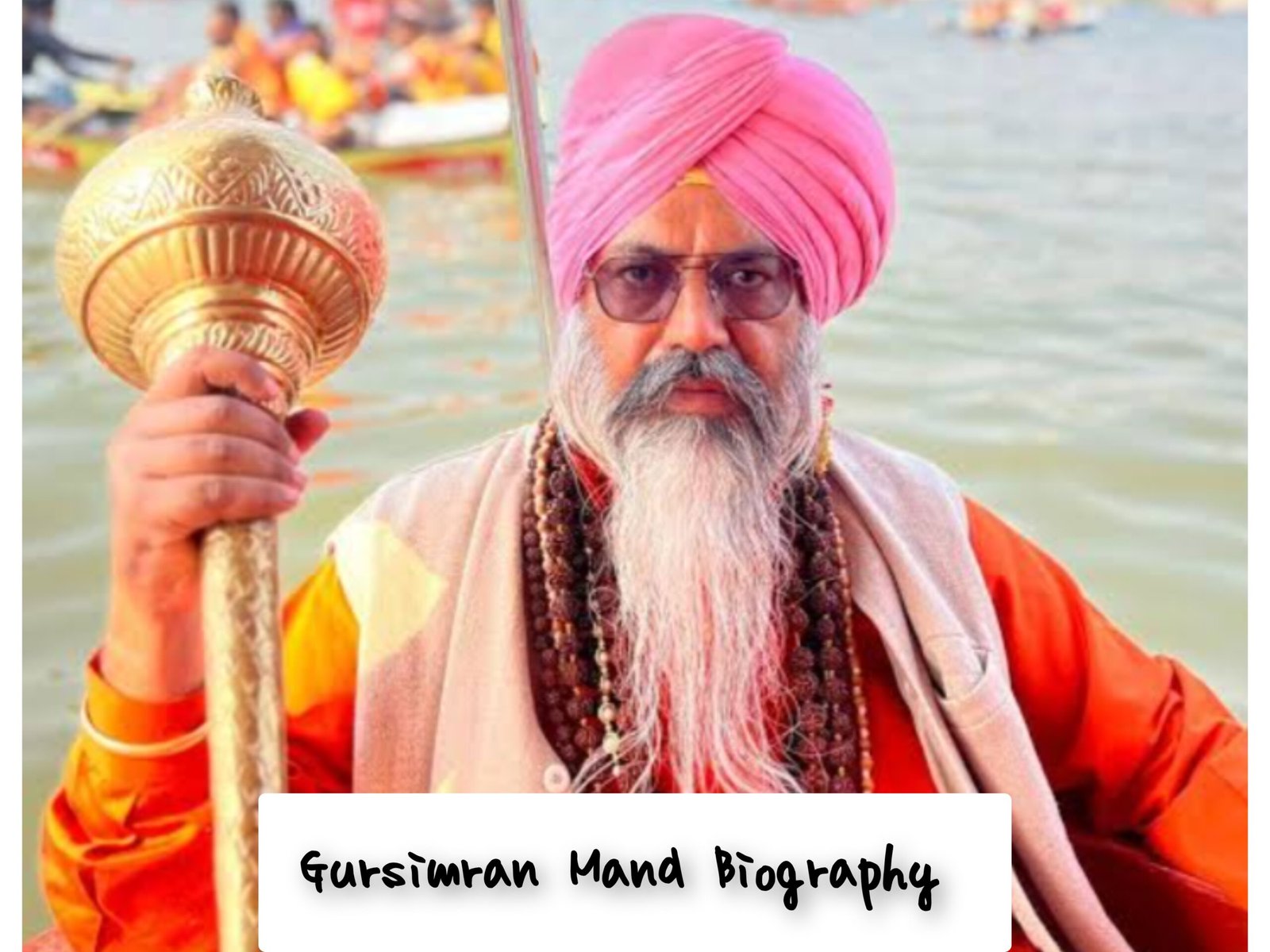
Gursimran Singh Mand was born in the village of Bhutta in Ludhiana district of Punjab, India. He is an Indian national known for his work as a political activist, social worker, and the national president of the International Anti-Khalistan Front.
Gursimran Singh Mand has spent much of his public life speaking against separatism and supporting national unity. His journey from a farming family in rural Punjab to a figure who regularly faces threats for his views reflects the complex social and political environment of the region. This biography covers his background, public roles, personal circumstances, and the challenges he has encountered.
Gursimran Singh Mand Early Life
Gursimran Singh Mand was born on 19 October 1974 in Bhutta village, located in the Ludhiana East tehsil of Ludhiana district in the Indian state of Punjab. Punjab is a northern state of India with a rich agricultural tradition, a strong Sikh cultural presence, and a history marked by both prosperity and periods of conflict. Bhutta is a typical rural settlement in this region, where farming forms the backbone of daily life and community ties remain close.
He was the first child of Sardar Manjit Singh and Sardarni Amarjeet Kaur. His family had deep roots in both agriculture and local public service. His grandfather, Sardar Bhagwant Singh, owned about 27 acres of land and served as the sarpanch of Bhutta village from 1954 to 1965. During those years he focused on solving everyday problems of the villagers. After his death in 1971, Gursimran’s grandmother, Sardarni Balwant Kaur, continued community involvement by serving as a panchayat member from 1987 to 1992.
Gursimran’s father, Manjit Singh, also took part in cooperative institutions. He served as vice-president of the District Cooperative Union Limited from 1973 to 1979 and later as chairman of the Primary District Cooperative Agricultural Development Bank in Ludhiana. The family moved to Ludhiana city so that the children could receive better education while still maintaining strong links with the village.
Gursimran received his early education at Malwa Khalsa Senior Secondary School. Growing up in the 1980s and early 1990s, he witnessed the difficult period when Punjab faced militant activity linked to the demand for a separate Khalistan. These experiences shaped his later views on national integrity and the need to keep young people away from separatist ideas. The political and social atmosphere at home further encouraged his interest in public life.
Gursimran Singh Mand Family Background and Roots in Punjab
Punjab has long been known as the land of five rivers and the breadbasket of India. Ludhiana district is one of its most industrial and agricultural centres. Villages like Bhutta represent the rural side of this landscape, where land ownership, cooperative farming, and local governance have traditionally defined community standing.
The Mand family belonged to this rural Punjabi setting. They practised farming while also taking on responsibilities in village administration and cooperative bodies. This combination of agricultural work and public service created an environment in which Gursimran grew up understanding both the practical needs of farmers and the importance of organised community effort. His younger brother is Gagandeep Singh. The family’s decision to shift to Ludhiana for education while keeping village ties intact was typical of many Punjab families seeking better opportunities for the next generation without completely leaving their roots.
Gursimran Singh Mand Entry into Public Life
After completing his studies, Gursimran Singh Mand began working with his father in the real estate business. At the same time he became active in the Indian National Congress, viewing politics as a means of social service rather than a source of livelihood. He focused on connecting young people with mainstream politics and countering influences that encouraged alienation from the national mainstream.
His efforts in organising youth activities led the party to appoint him as secretary of the Ludhiana Youth Congress. This position marked his formal entry into organised political work. He developed close associations with senior Congress leaders of the time, including then Chief Minister Beant Singh, and worked to bring young people into constructive political channels.
Gursimran Singh Mand Career
Gursimran Singh Mand’s public career has centred on political organisation, social outreach, and later on a focused campaign against Khalistan-related separatism.
Gursimran Singh Mand Work with the Congress Party
In the early phase of his career he concentrated on youth mobilisation within the Congress structure in Ludhiana. He organised programmes aimed at making young people aware of the dangers of extremist ideologies and encouraging their participation in democratic processes. His approach combined local-level engagement with a clear nationalist stance. Over time he became a familiar figure in Ludhiana political circles, known for speaking openly on issues of national unity.
Gursimran Singh Mand Leadership of the International Anti-Khalistan Front
In later years Gursimran Singh Mand emerged as the national president of the International Anti-Khalistan Front, also referred to in some reports as the International Anti-Khalistani Terrorist Front. Through this platform he has consistently spoken against the Khalistan movement, criticised its supporters both inside and outside India, and called for stronger action against those who promote violence or separatism in the name of Punjab. He has publicly supported national institutions and leaders who take a firm line against terrorism and secessionist activities.
His public statements and activities have made him a target of threats from individuals and groups linked to pro-Khalistan networks, including those operating from abroad. He has received multiple death threats, including calls claiming links to Pakistani gangsters. In response he has cooperated with agencies such as the National Investigation Agency when they sought information related to these threats.
Gursimran Singh Mand Security and Public Incidents
Because of the threats against him, central authorities have provided him with Y-plus category security cover involving Central Reserve Police Force personnel. Despite this protection he has faced several serious incidents. In one widely reported event in August 2026, he and his son Bhavjot were attacked near the Panjokhra Sahib Gurdwara in Ambala district of Haryana. Their vehicle was damaged and they sustained injuries. Gursimran later stated that the attackers demanded that he raise slogans against the Prime Minister and the RSS and in favour of Khalistan and certain jailed figures. Police personnel who tried to intervene were also injured.
Earlier incidents and continuous threats have kept him under heavy security arrangements in Ludhiana. At times he has publicly expressed frustration with the restrictions that such protection imposes on his daily movement, yet he has continued to maintain his public positions.
Gursimran Singh Mand Stance on National Issues
Throughout his public life Gursimran Singh Mand has taken a clear position in favour of India’s territorial integrity. He has criticised overseas networks that promote Khalistan and has spoken against the use of religious or cultural symbols to advance separatist goals. He has also highlighted the impact of such ideologies on ordinary Punjabis and on the state’s development. His speeches and media interactions regularly stress the need for young people to reject violence and focus on education, employment, and constructive politics.
Gursimran Singh Mand Personal Life
Gursimran Singh Mand lives in Ludhiana. He is married and has a son named Bhavjot, who was with him during the Ambala incident. Family members have also faced the consequences of the threats directed at him. The continuous security presence around his home has affected normal family routines, a reality he has occasionally spoken about in public.
Despite the pressures of public life and security concerns, he has maintained connections with his village roots and with the broader Punjabi community. His personal life remains largely private, with most public attention focused on his political and activist work rather than domestic details.
Gursimran Singh Mand Challenges and Controversies
Public figures who take strong positions on sensitive issues in Punjab often attract both support and opposition. Gursimran Singh Mand’s outspoken criticism of Khalistan has led to repeated threats, physical attacks, and intense media coverage. Some critics have questioned his methods or past associations, while supporters view him as a rare voice willing to confront separatism directly.
The recent attack near a gurdwara and the subsequent police statements illustrate the tensions that surround his movements. Local authorities have recorded different accounts of what triggered specific incidents, yet the pattern of threats over several years is well documented through complaints and agency inquiries.
Gursimran Singh Mand Awards
No major national civilian awards have been publicly reported for Gursimran Singh Mand. His recognition has come mainly through the leadership position he holds in the International Anti-Khalistan Front and through the security cover granted by the central government in response to assessed threats. Public acknowledgment of his work has largely taken the form of media coverage of his statements and the official attention given to the risks he faces.
Gursimran Singh Mand Role in Contemporary Punjab Discourse
In recent years Punjab has seen renewed discussion around issues of identity, migration, drug problems, and residual separatist sentiments. Figures like Gursimran Singh Mand occupy a specific space in this conversation by insisting that any legitimate grievances of the Sikh community or of Punjab as a whole must be addressed within the framework of the Indian Constitution. His insistence on rejecting violence and foreign-sponsored narratives has kept him in the news even when larger political parties prefer more cautious language.
His background in a farming family from Ludhiana gives him a local credibility that some urban or diaspora activists lack. At the same time, the continuous need for heavy security shows the personal cost of maintaining such a position.
Conclusion
Gursimran Singh Mand’s life story begins in a modest farming household in Bhutta village and moves through local Congress youth work into a more specialised role opposing Khalistan ideology. Born in 1974 in Punjab, he has consistently linked his public activity to the idea of national unity and the protection of ordinary citizens from extremist influence. The threats, attacks, and security arrangements that now form part of his daily reality underline both the intensity of the issues he addresses and the determination with which he continues his work. His biography remains closely tied to the evolving social and political currents of Punjab and of India as a whole.
FAQs
Who is Gursimran Singh Mand?
Gursimran Singh Mand is an Indian political activist and the national president of the International Anti-Khalistan Front. He is known for his strong public opposition to the Khalistan movement and for his earlier work with the Youth Congress in Ludhiana.
Where was Gursimran Singh Mand born?
He was born in Bhutta village in Ludhiana district of the Indian state of Punjab.
What is Gursimran Singh Mand’s date of birth?
Gursimran Singh Mand was born on 19 October 1974.
What is the International Anti-Khalistan Front?
It is an organisation led by Gursimran Singh Mand that works against Khalistan-related separatism and related terrorist activities. He serves as its national president.
Has Gursimran Singh Mand faced threats?
Yes. He has received multiple death threats over the years, including calls linked to Pakistani-based gangsters. He has also been physically attacked, most notably near a gurdwara in Ambala in August 2026.
What security does Gursimran Singh Mand receive?
He has been provided Y-plus category security by the central government, involving personnel from the Central Reserve Police Force, because of the assessed threat to his life.
What was Gursimran Singh Mand’s early political role?
He served as secretary of the Ludhiana Youth Congress and worked to mobilise young people within the Indian National Congress while opposing extremist influences.
Where does Gursimran Singh Mand live?
He resides in Ludhiana, Punjab, and maintains connections with his ancestral village of Bhutta.