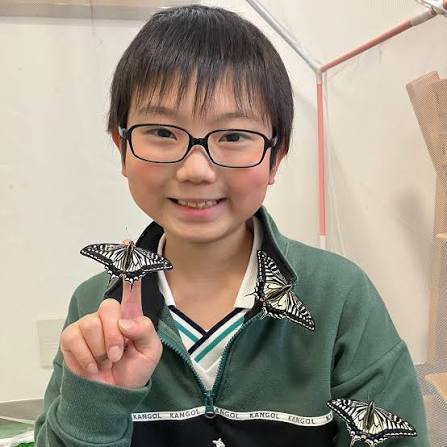
Jo Nagai Biography & Her Discovery
A name that has quickly spread across news outlets and social media platforms in recent weeks belongs to a ten year old elementary school student from Japan. Jo Nagai, a young researcher from Kobe, has captured worldwide curiosity after his years long fascination with butterflies led to a scientific study that challenges long standing assumptions about insect memory. This article offers a complete and updated biography of Jo Nagai, covering his age, background, nationality, the story behind his discovery, and the latest developments surrounding his growing recognition.
Note: A quick clarification on pronouns, since search interest around this story has used varying wording. Jo Nagai is referred to as “he” in verified reporting from multiple international outlets, and this article follows that established reporting.
Who Is Jo Nagai?
Jo Nagai is a ten year old student at Ibuki East Elementary School in Kobe, Japan. What began as an ordinary childhood hobby of raising butterflies at home eventually turned into a scientific inquiry serious enough to be presented in front of professional entomologists. Jo’s curiosity was first sparked when he noticed something unusual: butterflies he had personally raised from caterpillars appeared to recognize him even after completing metamorphosis, the dramatic biological transformation that turns a caterpillar into a butterfly.
Rather than dismissing the observation as coincidence, Jo began documenting his findings in detail, eventually filling hundreds of handwritten pages describing insect behavior. His dedication to the subject reflects a passion for animals and nature that, according to reports, he has held since early childhood.
Jo Nagai’s Age and Nationality
Jo Nagai is ten years old and is a citizen of Japan. He was raised and continues to live in Kobe, a major port city in the Hyogo Prefecture of Japan known for its blend of traditional culture and modern industry. As a Japanese national and elementary school student, Jo represents a striking example of how young minds anywhere in the world can contribute meaningfully to scientific understanding when given the right encouragement and support.
Background and Family Life
Details about Jo Nagai’s parents and immediate family have largely been kept private by those reporting his story, which is consistent with standard practice when covering minors in the media. What is publicly known is that Jo’s early and sustained interest in insects was nurtured from a young age, allowing him the freedom and support to observe, document, and eventually experiment with the butterflies he raised at home. This kind of supportive environment is often cited as a key factor in helping young learners pursue scientific curiosity outside of a formal classroom setting.
Jo is also recognized as a scholar of the Son Masayoshi Philanthropic Foundation, an organization dedicated to supporting exceptionally talented young people throughout Japan. Being selected as a scholar of this foundation highlights the broader recognition his intellectual curiosity had already earned before his butterfly research became an international story.
The Discovery That Made Jo Nagai Famous
Jo Nagai’s research centers on a fascinating and previously underexplored question: can a caterpillar’s memories survive the complete biological restructuring it undergoes during metamorphosis? During this transformation, a caterpillar’s body essentially breaks down within a protective chrysalis before rebuilding itself into an entirely different physical form as a butterfly. For a long time, many scientists assumed that any memories or learned behaviors from the caterpillar stage would be lost entirely in this process, since the nervous system undergoes such extensive restructuring.
Jo’s own observations suggested otherwise. He noticed that butterflies he had raised continued to behave as though they recognized him, prompting him to design a structured experiment to test the idea formally. His methodology reportedly involved exposing caterpillars to a specific scent under controlled conditions, then observing whether the resulting butterflies retained any behavioral response to that same scent after completing metamorphosis.
According to widely circulated reports, Jo’s trained butterflies displayed a noticeably higher rate of avoiding a particular scent compared to a control group that had not been exposed to the same conditioning as caterpillars. This outcome suggested that some form of memory or learned association may indeed persist through metamorphosis, a finding that pushes back against previous assumptions in the field of insect cognition.
Perhaps even more remarkable, some reports indicate that Jo extended his research to examine the offspring of his conditioned butterflies, finding that even the next generation displayed a similar behavioral response despite never having undergone the original conditioning themselves. If accurately replicated and independently verified, this would point toward the possibility of behavior being passed down across generations in ways not previously well understood in this species.
It’s worth noting that, as with any early stage research, especially research led by a very young and self taught investigator, the scientific community has emphasized that Jo’s findings would benefit from further independent verification before being treated as fully conclusive. Even so, his structured approach to observation, experimentation, and documentation has drawn genuine respect from professional researchers.
Mentorship and Scientific Support
Part of what makes Jo Nagai’s story so compelling is the mentorship he received along the way. Reports indicate that Jo reached out directly to an established entomologist with prior experience studying memory retention in moths, requesting guidance on how to properly expand and structure his own experiment. This exchange reportedly grew into an ongoing collaboration, with the experienced researcher helping Jo adapt complex laboratory methodology into something that could realistically be carried out from his own home.
This mentorship reflects a broader and encouraging trend in modern science: the willingness of established researchers to take a young person’s curiosity seriously and provide guidance rather than dismissal. It also highlights how accessible scientific inquiry can be when a curious mind is paired with the right support system.
Presentation to the Scientific Community
Jo’s research did not remain confined to his home. His findings were eventually presented before a gathering of professional entomologists, an unusual and impressive achievement for someone still in elementary school. His detailed written research, reportedly spanning dozens of pages, has since attracted attention from science communicators, educators, and members of the public who have been captivated by the blend of childlike curiosity and methodical scientific rigor on display.
Public Reaction and Online Attention
As is common with any viral story, Jo Nagai’s research has generated a wide range of reactions online. Many have praised his patience, curiosity, and the impressive rigor of his experimental design for someone his age. Others have raised questions about the ethical treatment of the insects involved in his experiments, prompting clarifying discussion around the natural defense mechanisms of caterpillars and how the conditioning process was designed to cause discomfort rather than harm.
This kind of public debate, while sometimes intense, has ultimately contributed to wider conversations about animal cognition, ethical research practices, and how young people can be supported in pursuing scientific curiosity responsibly.
What’s Next for Jo Nagai
Despite the global attention his research has received, reports suggest that Jo Nagai remains grounded in his long term ambition, which is to become a veterinarian focused on caring for insects. This goal reflects the same underlying motivation that sparked his research in the first place: a genuine love for animals and a desire to understand and protect them.
As independent researchers continue to examine and potentially replicate his findings, it is likely that Jo Nagai’s name will continue to surface in conversations about the future of citizen science and the role young people can play in scientific discovery.
Conclusion
Jo Nagai’s journey from a curious child raising butterflies in Kobe to a young researcher recognized on the international stage is a compelling reminder that scientific curiosity has no minimum age requirement. His discovery, whether it holds up fully under further scientific scrutiny or not, has already succeeded in sparking meaningful global conversation about memory, metamorphosis, and the untapped potential of young, curious minds. As more information becomes available, this story is likely to continue developing, and readers are encouraged to follow verified and reputable science and news outlets for the latest updates.
Frequently Asked Questions (FAQs)
1. How old is Jo Nagai? Jo Nagai is ten years old and is currently an elementary school student in Japan.
2. Where is Jo Nagai from? Jo Nagai is from Kobe, a city in the Hyogo Prefecture of Japan, and he is a Japanese national.
3. What school does Jo Nagai attend? According to widely reported information, Jo Nagai attends Ibuki East Elementary School in Kobe, Japan.
4. What did Jo Nagai discover? Jo Nagai conducted an experiment suggesting that butterflies may retain certain memories or learned behaviors from their time as caterpillars, even after undergoing the complete biological transformation of metamorphosis.
5. Has Jo Nagai’s research been scientifically verified? While his findings have been presented to professional entomologists and have generated significant interest, some aspects of his research are still considered to require further independent verification, which is standard practice for any new scientific claim.
6. Did Jo Nagai work alone on his research? No, reports indicate that Jo received mentorship and guidance from an experienced entomologist who helped him refine his experimental approach, though the original curiosity and much of the hands on observation came from Jo himself.
7. Why did Jo Nagai’s story go viral? His story resonated widely because it combines a heartfelt personal motivation, noticing that his butterflies seemed to recognize him, with a surprisingly rigorous and methodical scientific investigation for someone his age.
8. What does Jo Nagai want to do in the future? Despite his scientific recognition, Jo has reportedly expressed a long term goal of becoming a veterinarian, driven by his enduring love for animals.
9. Is Jo Nagai part of any organization supporting young talent? Yes, Jo Nagai is recognized as a scholar of the Son Masayoshi Philanthropic Foundation, which supports exceptionally talented young people across Japan.
10. Were the insects in Jo Nagai’s experiment harmed? Public discussion around this topic has clarified that the conditioning process was designed to cause mild discomfort rather than harm, triggering a natural defense response rather than injuring the insects involved.
This article is based on publicly available and widely reported information as of August 2026. As with any developing story, readers are encouraged to consult verified news sources for the most current updates.