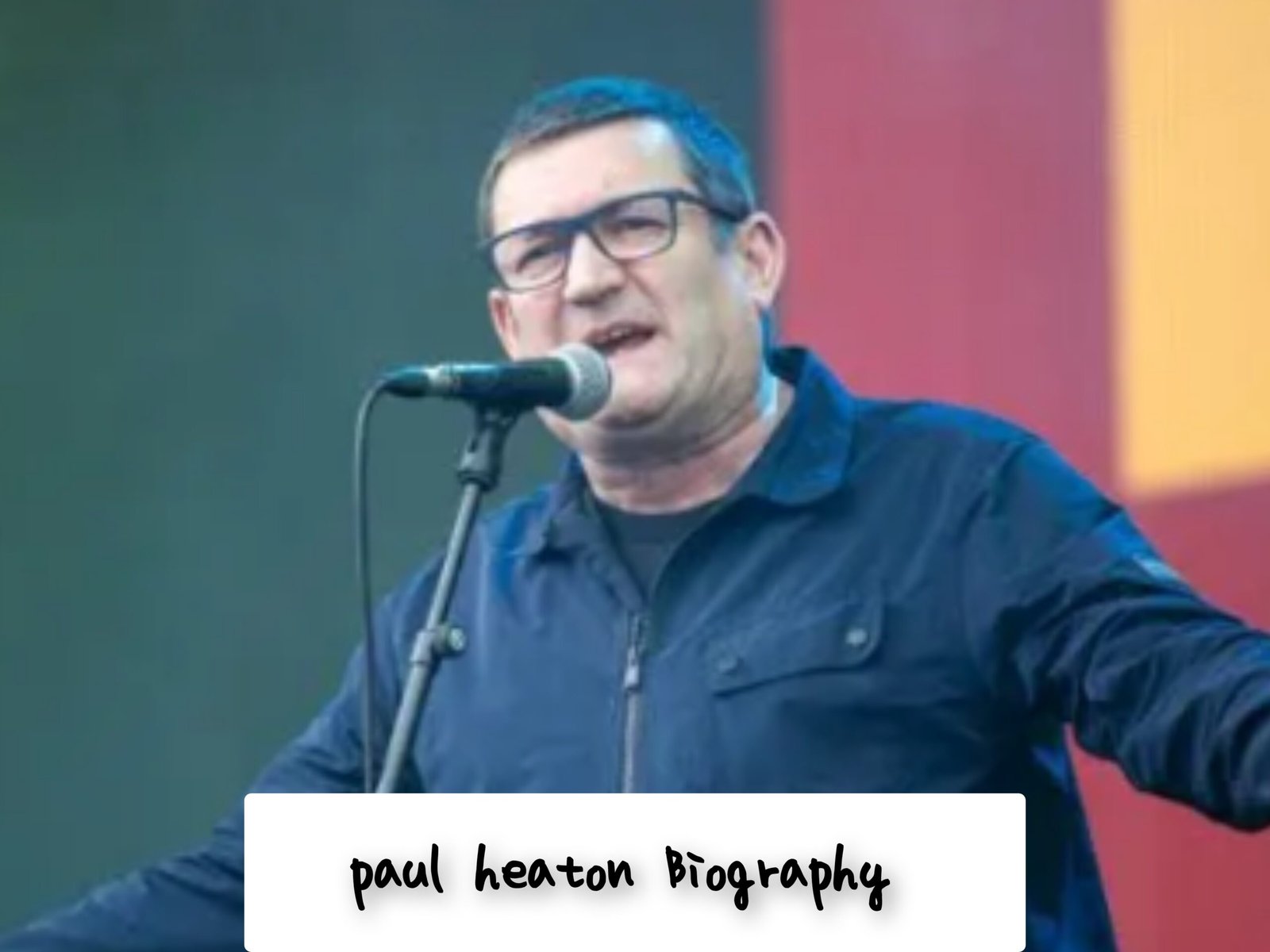
Paul David Heaton is an English singer-songwriter whose career has spanned more than four decades. Born in the north of England, he first gained attention as the lead singer and main lyricist of The Housemartins before forming The Beautiful South, a group that became one of the most consistent commercial successes in British pop during the 1990s and early 2000s. His work is marked by sharp observation of everyday life, dry humour, and melodies that stay in the mind long after the song ends.
Over the years Heaton has continued to write and record both as a solo artist and in partnership with former Beautiful South singer Jacqui Abbott. His songs often examine ordinary people, relationships, social pressures and the quieter corners of British life. He remains active on stage and in the studio, drawing on a body of work that includes major chart hits, platinum albums and a lasting connection with audiences across the United Kingdom and beyond.
Paul Heaton Early Life
Paul David Heaton was born on 9 May 1962 in Bromborough, a town on the Wirral peninsula in what was then Cheshire and is now part of Merseyside. His parents were Doris and Horace Heaton. He is the youngest of three sons, with two older brothers named Mark and Adrian. When he was four years old the family moved to Sheffield in South Yorkshire after his father took a management position. Heaton has often described his childhood as fairly middle class, though the schools he attended and the friends he mixed with gave it a more ordinary feel.
He spent the next decade in Sheffield and still speaks of the city with strong affection. He has said he was bred in Sheffield and fed in Surrey, a phrase that sums up the two places that shaped him. He attended King Edward VII School in the Crosspool area of the city. Football was his main passion. He supported Sheffield United and played the game himself at junior and amateur level for many years, sometimes driving home after late night gigs so he could turn out for his team the next day. He is estimated to have played more than seven hundred competitive matches.
In his early teens the family moved again, this time to Chipstead in Surrey because of his father’s work. There he and his brother Adrian formed a band called Tools Down with friends. He later played in another group, the Stomping Pond Frogs, that included future Housemartins member Norman Cook. Heaton left school and took office jobs for several years, including work in accountancy. Those years of routine office life later fed into songs such as Happy Hour. He did not go to university. Instead he hitchhiked around Europe for a time. One story he has told concerns being ordered off a motorway in France by police and walking across a field while singing, realising that his voice sounded more professional than he had expected.
In 1983 he moved to Hull in East Yorkshire. The city became the base for the next stage of his life and the place where his professional music career began.
Paul Heaton State of Origin and Northern Roots
Although he was born on the Wirral, Paul Heaton’s identity is closely tied to the north of England. Bromborough sits on the Mersey estuary opposite Liverpool. The family move to Sheffield placed him in the industrial and cultural heart of South Yorkshire. Sheffield’s working class character, its football culture and its sense of community left a lasting mark. He has returned to the city for concerts, including a major show at Bramall Lane, the home ground of Sheffield United, and has spoken warmly about the influence of the place on his outlook.
Hull provided the setting for the formation of The Housemartins. The band’s debut album title, London 0 Hull 4, captured a deliberate northern stance against the capital. Later he lived for a time in Leeds before settling in Manchester, where he still lives. Manchester has become his long term home and the base for much of his later work. These northern cities form the geography of his life and the backdrop for many of the stories in his songs. He has remained connected to the region through football, pubs, cycling and a preference for ordinary places over the more glamorous centres of the music industry.
Paul Heaton Career
The Housemartins Years
In Hull in 1983 Heaton began busking with guitarist Stan Cullimore. They soon formed The Housemartins. Early members included Ted Key on bass and Hugh Whitaker on drums. Key was replaced by Norman Cook, who later became known as Fatboy Slim. Dave Hemingway later took over on drums. Heaton billed himself as P.D. Heaton in the early days. The band mixed jangly indie pop with lyrics that mixed left wing politics and Christian references. The inner sleeve of their first album carried the line Take Jesus Take Marx Take Hope.
Their first single Flag Day appeared in 1985 and gained attention after John Peel played it. Happy Hour reached number three in the UK in 1986. The debut album London 0 Hull 4 followed and climbed to number three on the albums chart. Later that year an a cappella cover of Caravan of Love, originally by Isley Jasper Isley, went to number one at Christmas. The second album, The People Who Grinned Themselves to Death, arrived in 1987. The Housemartins had several further hits before deciding to end the band in 1988. The split was amicable. Heaton and Hemingway moved on to a new project while Cook pursued dance music.
The Beautiful South Era
In 1988 Heaton and Hemingway formed The Beautiful South. The original line up included Dave Rotheray on guitar, Sean Welch on bass and Dave Stead on drums. Female vocalists became an important part of the sound. Briana Corrigan sang on the early records. Jacqui Abbott joined later and became a key partner. Alison Wheeler completed the later years.
The debut single Song for Whoever reached number two in 1989. The album Welcome to the Beautiful South followed and was a strong commercial success. You Keep It All In also charted highly. In 1990 the duet A Little Time, featuring Hemingway and Corrigan, became the band’s only number one single. Albums such as Choke, 0898 Beautiful South and Miaow kept the group in the public eye. Blue Is the Colour in 1996 and Quench in 1998 both reached number one. The compilation Carry On Up the Charts sold in very large numbers and became one of the biggest selling albums of its period in the UK.
Hits such as Rotterdam, Don’t Marry Her and Perfect 10 showed Heaton’s gift for catchy tunes paired with pointed or humorous lyrics. The band sold an estimated fifteen million records. In January 2007 they announced they were ending because of musical similarities, a typical Heaton joke. The group had been a fixture of British charts and radio for nearly two decades.
Solo Work and New Directions
After the Beautiful South ended, Heaton released solo material. In 2001 he put out Fat Chance under the name Biscuit Boy, also known as Crackerman. The album was later reissued under his own name. The Cross Eyed Rambler followed in 2008 and Acid Country in 2010. In 2011 and 2012 he created a project called The 8th, based on the seven deadly sins, for the Manchester International Festival. Different singers performed individual sections.
Collaboration with Jacqui Abbott
In 2014 Heaton reunited with Jacqui Abbott. Their first album together, What Have We Become, reached number three. Wisdom, Laughter and Lines and Crooked Calypso both entered the top five. Manchester Calling in 2020 went to number one, as did N.K Pop in 2022. The partnership restored Heaton to the top of the charts and produced songs that mixed the familiar wit with fresh arrangements. Health issues forced Abbott to step back from touring after 2022.
Recent Years and Ongoing Activity
Heaton continued with guest singers, including Rianne Downey. The Mighty Several, produced by Ian Broudie of the Lightning Seeds, was released in October 2024 and reached number two. A further album, Jenius, also produced by Broudie, is scheduled for 2026. He has performed at major festivals including Glastonbury, where a 2024 appearance included a reunion moment with Norman Cook. He continues to tour extensively, often keeping ticket prices modest and maintaining a close connection with audiences.
Paul Heaton Songwriting Style and Themes
Heaton’s lyrics stand out for their attention to ordinary detail. He writes about pubs, offices, relationships, class, football and the small dramas of daily life. Songs can be funny and cutting at the same time. Happy Hour grew out of irritation at office sexism and forced cheerfulness. Old Red Eyes Is Back and other tracks examine the effects of heavy drinking. Song for Whoever plays with the idea of writing hits for different audiences. His melodies are strong and memorable, often drawing on pop, soul, rock and roll and music hall traditions. Critics have noted that the warm delivery can mask sharper social comment. He has described two methods of writing: one entirely in his head and another that involves travel and a controlled amount of drink in specific settings, often pubs with square tables.
Paul Heaton Albums and Key Songs
Across The Housemartins, The Beautiful South, solo records and the albums with Jacqui Abbott, Heaton has released a large body of work. Housemartins albums include London 0 Hull 4 and The People Who Grinned Themselves to Death. Beautiful South studio albums range from Welcome to the Beautiful South and Choke through Blue Is the Colour, Quench, Painting It Red, Gaze and Superbi. Compilations such as Carry On Up the Charts and Soup collected the hits. Solo and collaborative albums include Fat Chance, The Cross Eyed Rambler, Acid Country, What Have We Become, Wisdom Laughter and Lines, Crooked Calypso, Manchester Calling, N.K Pop and The Mighty Several. Key songs that have remained popular include Happy Hour, Caravan of Love, Song for Whoever, A Little Time, Rotterdam, Don’t Marry Her, Perfect 10, You Keep It All In and later tracks such as those from the Abbott collaborations and Fish N Chip Supper.
Paul Heaton Awards
Recognition for Heaton’s songwriting has come later in his career. In 2022 he received the Ivor Novello Award for Outstanding Song Collection, acknowledging the body of work across The Housemartins, The Beautiful South and his later recordings. In 2020 Q magazine, as it closed, gave him a final award as its all time classic songwriter, partly in thanks for a generous donation he made to support staff who had lost their jobs. Earlier, The Beautiful South won a Brit Award for Best Video for A Little Time. He has never collected a large number of trophies, yet the quality and consistency of his writing have earned lasting respect from fellow musicians and the public.
Paul Heaton Personal Life
Heaton lives in Manchester with his wife Linda, whom he married in 2016 after they had been together for several years. He has three children from earlier relationships and Linda has two, forming a blended family. He has spoken positively about married life. For many years heavy drinking was part of the culture around The Beautiful South and featured in several songs. He has been open about the fact that alcohol once had a strong hold. In later years he has controlled it carefully, drinking mainly during short writing trips, often to Holland or elsewhere, and remaining largely teetotal at home. His wife has supported this approach.
He is an enthusiastic collector of football memorabilia, crisp packets, beer mats, postcards, comics and other everyday items. For a time he owned the lease of the King’s Arms pub in Salford, which he sold in 2015. Cycling is another long standing interest. He has organised tours by bicycle and, for his sixtieth birthday, arranged for free pints to be available in sixty pubs across the UK and Ireland. He remains a dedicated Sheffield United supporter and has kept links with northern communities. His public image is that of a down to earth figure who prefers ordinary settings and has a reputation for kindness, including free or low cost gigs and practical help for others.
Paul Heaton Influence and Public Image
Heaton is often described as one of the most reliable and understated songwriters of his generation. His ability to combine sharp observation with accessible tunes has influenced other writers who value storytelling and social detail. Fans appreciate the consistency and the sense that the songs come from lived experience rather than image. He has maintained left leaning views without turning every song into a lecture. His preference for fair ticket prices and his reluctance to chase celebrity have added to a reputation for integrity. Appearances on television, including football related programmes, and documentaries about his career have kept him visible without overexposure.
Paul Heaton Later Career and Continued Activity
In recent years Heaton has balanced recording with extensive live work. The albums with Jacqui Abbott brought him back to the top of the charts. After her withdrawal from the road he continued with Rianne Downey and other guest singers. The Mighty Several showed that the songwriting remained strong. Festival appearances, including Glastonbury, and arena tours have demonstrated lasting demand. A BBC programme collecting his performances and interviews has marked the breadth of his catalogue. Plans for further albums and tours indicate that he has no intention of slowing down. His method of writing, the careful management of personal habits, and the steady output suggest a career still in full flow well into his sixties.
Conclusion
Paul David Heaton has built a career on careful observation, strong melodies and a refusal to follow fashion for its own sake. From the early days in Hull with The Housemartins through the long run of The Beautiful South and the later partnerships and solo records, he has produced songs that many people recognise and return to. His roots in the north of England, his interest in ordinary lives, and his personal steadiness in later years form a coherent picture. The awards that arrived later in life confirmed what listeners had known for a long time. Heaton continues to write, record and perform, adding to a catalogue that already stands as one of the most distinctive in modern British popular music.
FAQs
Who is Paul Heaton?
Paul David Heaton is an English singer and songwriter best known as the lead singer and main lyricist of The Housemartins and The Beautiful South. He has also recorded solo albums and a series of successful records with Jacqui Abbott.
When and where was Paul Heaton born?
He was born on 9 May 1962 in Bromborough on the Wirral, then in Cheshire and now part of Merseyside, England.
What bands was Paul Heaton in?
He was the frontman of The Housemartins from 1983 to 1988 and then formed The Beautiful South, which ran from 1988 to 2007. He has also worked extensively as a solo artist and in partnership with Jacqui Abbott.
What are some of Paul Heaton’s most famous songs?
Well known songs include Happy Hour and Caravan of Love with The Housemartins, and Song for Whoever, A Little Time, Rotterdam, Don’t Marry Her and Perfect 10 with The Beautiful South. Later work with Jacqui Abbott and solo material has added further popular tracks.
Is Paul Heaton married and does he have children?
Yes. He married his partner Linda in 2016. He has three children and she has two, and they form a blended family. They live in Manchester.
Has Paul Heaton won any major awards?
In 2022 he received the Ivor Novello Award for Outstanding Song Collection. In 2020 he was given Q magazine’s final award as its all time classic songwriter. The Beautiful South earlier won a Brit Award for the video of A Little Time.
Where does Paul Heaton live now?
He lives in Manchester with his wife and family.
Is Paul Heaton still making music?
Yes. He released The Mighty Several in 2024 and has announced further work, including an album titled Jenius scheduled for 2026. He continues to tour.