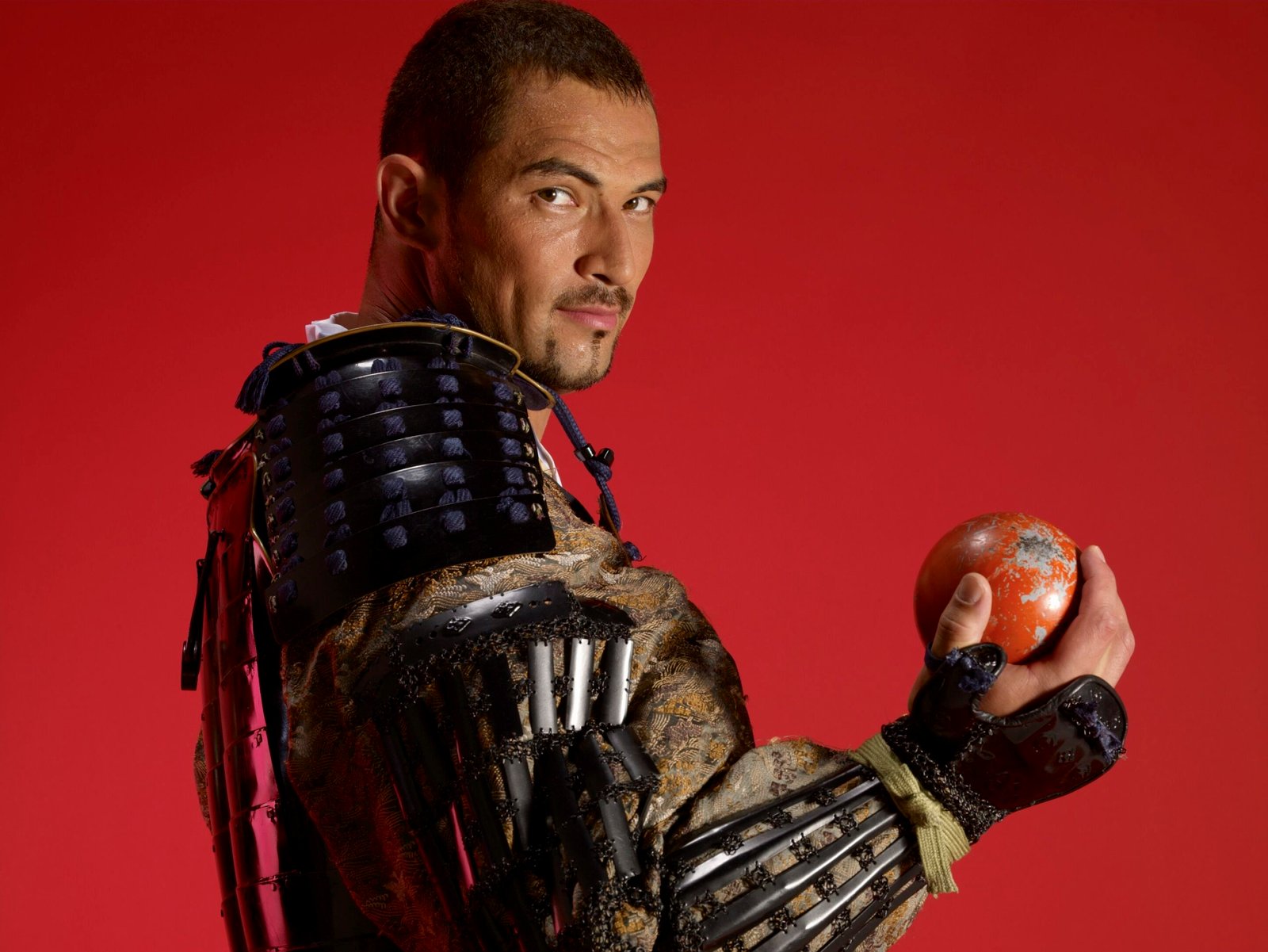
Shigenobu Murofushi Biography, Early Life, Career, Personal Life, and Latest Events
Shigenobu Murofushi is one of the most influential figures in Japanese athletics history. A legendary hammer thrower, university professor, coach, and mentor, he spent decades building a reputation that extended far beyond his own competition record.
Known as the “Ironman of Asia,” Murofushi dominated the Asian hammer throw for many years, winning the Asian Games title five consecutive times. He also represented Japan at multiple Olympic Games and became one of the country’s most technically accomplished throwing athletes. His personal best of 75.96 metres, established in 1984, stood as the Japanese national record for almost 14 years before his son Koji Murofushi surpassed it in 1998.
His influence did not end when his competitive career ended. As a coach and educator at Chukyo University, Shigenobu helped develop generations of athletes. His most famous pupil was also his son, Koji, who went on to win Olympic gold in Athens in 2004 and become world champion in 2011. His daughter, Yuka Murofushi, also became an Olympian in the hammer throw and established Japanese records in throwing events.
In September 2026, Shigenobu returned to the international spotlight in a remarkable family moment. At the opening ceremony of the Aichi-Nagoya Asian Games, he and Koji jointly lit the ceremonial cauldron, bringing together two generations of one of Japan’s most celebrated sporting families.
Who Is Shigenobu Murofushi?
Shigenobu Murofushi is a retired Japanese hammer thrower and athletics coach who became one of the dominant figures in Asian throwing events during the 1970s and 1980s.
He was born on October 2, 1945. There is a small discrepancy among biographical sources concerning his birthplace. World Athletics and Olympedia record his birth as having taken place in Hebei, China, while Japanese sources commonly describe him as being from Numazu, Shizuoka Prefecture. In an interview with the Sasakawa Sports Foundation, Murofushi himself explained that he was born in Hebei in October 1945 and returned to Japan with his family when he was about two months old. His family settled in Numazu, where he grew up.
His life therefore began during an extraordinary period in Japanese history, immediately after the end of the Second World War. Sport would eventually become the central force in his life.
Although he became internationally famous for hammer throwing, hammer throw was not his first sporting passion. As a child growing up in Numazu, he was particularly interested in sumo wrestling. According to his own account, he was so strong at local sumo competitions that by the third year of junior high school he was competing in the adult division. He even received an invitation connected with the professional sumo world before eventually choosing athletics.
That early experience with strength, balance and body control would later become important to his approach to hammer throwing.
Shigenobu Murofushi’s Early Life
Murofushi grew up in Numazu, a city in Shizuoka Prefecture. His childhood environment helped shape his physical development and his interest in sport.
Rather than following a conventional academic or professional route, he increasingly gravitated toward athletics. He eventually entered Nihon University, where he studied economics and developed his throwing career. Japanese biographical sources state that he graduated from Nihon University in 1968 and joined the paper company Daishowa Paper.
His competitive development was remarkable because he did not possess the enormous physical dimensions that were common among many world-class hammer throwers.
Murofushi stood around 181 centimetres tall and weighed approximately 90 kilograms during his peak competitive years. Even by the standards of elite throwing, this was relatively modest. His success therefore depended heavily on technique, timing, strength and an unusually detailed understanding of movement.
One of the defining features of his career was his willingness to experiment technically.
The Development of His Hammer-Throw Technique
Murofushi became particularly associated with the four-turn technique in hammer throwing.
According to a 2025 interview published by Shueisha Online, he initially competed using a three-turn technique. In 1971, at age 25, he threw 70.18 metres, becoming the first Asian athlete to surpass 70 metres in the hammer throw. At around age 30, he changed to a four-turn technique and continued improving.
This was significant because hammer throwing is an event in which seemingly small technical adjustments can produce major differences in distance.
Murofushi developed his technique through careful observation and experimentation rather than relying solely on physical strength. His philosophy later became central to the way he coached his children and other athletes.
Shigenobu Murofushi’s Hammer-Throw Career
Murofushi’s competitive career stretched across several decades.
He became one of Japan’s leading hammer throwers during the late 1960s and 1970s and eventually established himself as one of Asia’s best.
His domestic record was extraordinary. Japanese sources credit him with 12 national championship victories, including a run of 10 consecutive Japanese championships. He also became a five-time consecutive Asian Games champion.
Asian Games Success
The Asian Games were where Murofushi established his greatest continental dominance.
He won silver in the hammer throw at the 1966 Asian Games in Bangkok. Four years later, he won gold at the 1970 Asian Games.
He successfully defended the title in:
- 1974 in Tehran
- 1978 in Bangkok
- 1982 in New Delhi
- 1986 in Seoul
That gave him five consecutive Asian Games gold medals, in addition to his 1966 silver. His Asian Games record remains one of the defining achievements of his career.
This extraordinary consistency earned him the nickname “Ironman of Asia.”
The nickname reflected more than his medal count. Murofushi continued competing at an advanced age for an elite throwing athlete and was still improving his technique and records late into his career.
Olympic Career
Murofushi also competed on the Olympic stage.
He competed at the 1972 Munich Olympics, where he finished eighth in the men’s hammer throw. Four years later, he competed at the 1976 Montreal Olympics, finishing 11th. He later returned to the Olympics at the 1984 Los Angeles Games, where he competed in the qualifying round.
Murofushi also served as Japan’s opening-ceremony flag bearer at the 1984 Los Angeles Olympics.
Although he never won an Olympic medal, his Olympic career was important because he demonstrated that a Japanese hammer thrower could consistently reach the highest level of international competition.
His son Koji would later complete the Olympic part of the family story by winning gold in Athens.
Shigenobu Murofushi’s National Record
One of the most important achievements of Murofushi’s later career came in 1984.
On July 15, 1984, he recorded a personal best of 75.96 metres. World Athletics lists 75.96 metres as his official personal best.
The throw became the Japanese national record and remained at the top of the country’s record books for nearly 14 years.
In 1998, his son Koji finally surpassed it with a throw of 76.65 metres. World Athletics records that Koji’s throw broke the national record that had belonged to his father for almost 14 years.
The moment represented something more than a statistical change. It was the beginning of a remarkable transition from father to son.
His Final Years as an Athlete
Murofushi did not retire from serious competition at an unusually young age.
Japanese sources note that he continued his competitive career until around the age of 40. Even as he grew older, he remained interested in improving the technical side of his throwing rather than relying exclusively on physical power.
His longevity became part of his reputation.
He demonstrated that an athlete could remain competitive by constantly refining technique, studying movement and adapting training rather than simply depending on physical attributes.
This philosophy later became one of the most important features of his coaching career.
Shigenobu Murofushi as a Coach
Murofushi’s influence on Japanese athletics arguably became even greater after his competitive career.
In 1980, he joined Chukyo University as a lecturer in its physical education faculty. He subsequently became an associate professor and then professor. He retired from the university in 2011 and was later recognized as professor emeritus.
At Chukyo University, he taught and coached athletes while continuing to develop his ideas about throwing technique and athletic development.
His coaching philosophy was based on studying the individual athlete rather than forcing every athlete into the same system.
In an interview with Chukyo University’s parent institution, Murofushi explained that he tried to observe each student carefully, identify the athlete’s particular problems and determine what kind of guidance would help that individual improve. He compared coaching in some respects to medicine because the coach must identify the underlying problem before deciding how to address it.
He also emphasized that winning competitions was not the only purpose of education or coaching. For him, the deeper question was how to help a person develop.
His Coaching Philosophy
Murofushi’s coaching approach can be summarized around several principles.
Individual development
He believed athletes were different and therefore needed different approaches.
Instead of treating every athlete identically, he studied their movement, physical characteristics, psychological tendencies and technical weaknesses.
Technical awareness
Murofushi’s own career demonstrated how technique could compensate for physical disadvantages.
He therefore placed enormous importance on movement and the development of athletic sensation.
Experimentation
He encouraged athletes to move outside their comfort zones.
In a detailed interview with Panasonic, his daughter Yuka described how her father sometimes deliberately challenged athletes to abandon rigid habits and experiment with new approaches. Murofushi himself described this role as being something of a “destroyer,” meaning that he wanted athletes to break fixed ideas and create more options for themselves.
Long-term development
He believed athletes should develop skills that could be used at different stages of their careers.
This approach became particularly evident in the way he coached his own children.
Shigenobu Murofushi and Koji Murofushi
The relationship between Shigenobu and Koji is one of the most famous father-son stories in Japanese athletics.
Koji Murofushi was born on October 8, 1974, in Numazu, Shizuoka Prefecture. He initially tried several sports and did not immediately look like a future world-class hammer thrower. His father began teaching him hammer-throw fundamentals when he was young.
When Koji was about 10, Shigenobu began teaching him the basic movements of hammer throwing.
Koji later became an exceptional athlete.
He broke his father’s Japanese record in 1998. He won silver at the 2001 World Championships and bronze at the 2003 World Championships before winning Olympic gold at the 2004 Athens Games. He subsequently became world champion in 2011.
The father-son partnership therefore produced one of the most remarkable successions in Japanese athletics.
Shigenobu’s coaching role was particularly significant during Koji’s formative years. World Athletics reported that Shigenobu coached his son and closely analyzed his training and competitions.
Koji has repeatedly acknowledged the importance of his father in his development.
Their relationship was not simply that of a parent and child. They were also coach and athlete, teacher and student, and eventually colleagues in sports research and education.
Shigenobu Murofushi and Yuka Murofushi
Shigenobu also coached his daughter, Yuka Murofushi, who became an accomplished throwing athlete.
Yuka competed in both the discus and hammer throw and represented Japan at the 2004 Athens Olympics in the women’s hammer throw. The Japanese Olympic Committee lists Shigenobu as a major influence on her athletic development.
She also established Japanese records in the discus and hammer throw during her career.
In a Panasonic interview, Yuka explained that growing up with an Olympian father meant that athletics was a natural part of her childhood. She remembered accompanying her father to athletics stadiums and eventually developing her own throwing career.
Her experience also reveals another side of Shigenobu as a parent and coach. He attempted to treat his children as athletes rather than giving them preferential treatment simply because they were his children.
Yuka recalled that when she attended Chukyo University, her father was also involved in teaching and coaching. Shigenobu said he tried to coach his son, daughter and other students fairly and to avoid focusing exclusively on his own children.
Shigenobu Murofushi’s Personal Life
Shigenobu Murofushi has kept much of his private life away from the public spotlight.
The best-documented part of his family life is his relationship with his children, Koji and Yuka, both of whom followed him into elite athletics.
His former wife was a Romanian athlete, according to World Athletics reporting on Koji’s career. She competed in the javelin throw, making athletics a major part of both sides of the family background. World Athletics also reported that Shigenobu’s parents had divorced by the time of its 2011 profile.
Publicly available biographies focus much more heavily on his sporting and academic achievements than on his marriage or private domestic life.
That relative privacy is worth noting because much of the public interest in Murofushi has centered on his role as a father and mentor rather than on celebrity-style personal details.
Shigenobu Murofushi’s Children
Koji Murofushi
Koji is Shigenobu’s eldest son and the most internationally famous member of the Murofushi family.
His achievements include:
- Olympic gold in the 2004 hammer throw
- Olympic bronze in 2012
- World Championship gold in 2011
- World Championship silver in 2001
- World Championship bronze in 2003
- Multiple Asian Games medals
- Numerous Japanese national titles
He later moved into sports administration and became Commissioner of the Japan Sports Agency in 2020.
Yuka Murofushi
Yuka became a high-level discus and hammer thrower and competed at the 2004 Athens Olympics.
She later moved into academia and sports education. A 2021 Panasonic profile identified her as an associate professor at Juntendo University’s Faculty of Health and Sports Science and described her continued work in education, research and sports commentary.
The achievements of both children reinforce the extraordinary athletic legacy established by their father.
Shigenobu Murofushi’s Books and Ideas
Murofushi has also expressed his sporting philosophy through writing.
His published works include Tetsukyu wa Oshiete Kureta, commonly translated as The Iron Ball Taught Me. His more recent discussions of sport have continued to focus on the relationship between physical ability, technique, instinct, coaching and human development.
His philosophy is broader than hammer throwing.
He has argued that athletic development requires attention to the senses and movement patterns that athletes develop through practice. His coaching philosophy places considerable value on observation and the ability to understand what an athlete is actually experiencing rather than merely looking at competition results.
That approach helps explain why his influence continued long after his own retirement.
What Is Shigenobu Murofushi Doing Now?
As of September 2026, Murofushi remains an important figure in Japanese athletics history and was recently thrust back into the national spotlight.
The biggest recent event occurred on September 19, 2026, at the opening ceremony of the Aichi-Nagoya Asian Games.
Murofushi and his son Koji were selected to perform the final stage of the torch ceremony and jointly lighted the Asian Games cauldron. Koji carried the torch to his father, and the two generations of hammer throwers then came together for the ceremonial lighting.
The symbolism was especially powerful because the Asian Games are where Shigenobu built much of his legendary reputation.
He won five consecutive Asian Games hammer-throw titles from 1970 through 1986. His son Koji also became an Asian Games champion, meaning the Murofushi family has played a significant role in the history of the competition.
The 2026 ceremony therefore represented a full-circle moment.
The father who once dominated the Asian Games as an athlete stood beside the son who became an Olympic champion, with both participating in the opening ceremony of another Asian Games hosted in Japan.
Shigenobu Murofushi’s Legacy
Shigenobu Murofushi’s legacy can be understood in three parts: athlete, coach and father.
As an athlete, he was one of Japan’s greatest hammer throwers. His five consecutive Asian Games titles, 12 Japanese championships and Olympic appearances established him as one of Asia’s most durable throwing specialists.
As a coach, he helped change the way throwing athletes could be developed. His emphasis on technique, individual characteristics, observation and athletic sensation influenced both his children and numerous other athletes.
As a father, he helped create an extraordinary sporting dynasty.
His son became an Olympic and world champion. His daughter became an Olympian and Japanese record holder. Both followed a path that began with the same man teaching them the fundamentals of movement and throwing.
Perhaps the most interesting part of Murofushi’s legacy is that his achievements did not depend solely on extraordinary physical size.
He was successful partly because he learned how to use the body efficiently.
That principle became central to his coaching philosophy: an athlete should not simply try to become stronger. The athlete should learn how to understand the body, develop technique, experiment, adapt and discover what works for the individual.
Shigenobu Murofushi’s Age
Born on October 2, 1945, Shigenobu Murofushi is 80 years old as of September 2026. World Athletics and Olympedia both record his birth date as October 2, 1945.
His appearance at the 2026 Asian Games opening ceremony came just weeks before his 81st birthday.
Frequently Asked Questions About Shigenobu Murofushi
1. Who is Shigenobu Murofushi?
Shigenobu Murofushi is a Japanese former hammer thrower, athletics coach and university professor. He was a five-time consecutive Asian Games hammer-throw champion and represented Japan at several Olympic Games.
2. When was Shigenobu Murofushi born?
He was born on October 2, 1945. His own account says he was born in Hebei, China, before returning to Japan as an infant. He grew up in Numazu, Shizuoka Prefecture.
3. How old is Shigenobu Murofushi?
He is 80 years old as of September 2026.
4. What sport did Shigenobu Murofushi play?
He competed in the hammer throw in athletics. He became one of Asia’s leading athletes in the event.
5. How many Asian Games gold medals did Shigenobu Murofushi win?
He won five consecutive Asian Games gold medals in the hammer throw, from 1970 through 1986. He also won a silver medal at the 1966 Asian Games.
6. Did Shigenobu Murofushi compete in the Olympics?
Yes. He competed at the 1972 Munich, 1976 Montreal and 1984 Los Angeles Olympics. He also served as Japan’s opening-ceremony flag bearer at the 1984 Games.
7. What was Shigenobu Murofushi’s personal best?
His official personal best in the hammer throw was 75.96 metres, recorded in 1984.
8. Who is Shigenobu Murofushi’s son?
His son is Koji Murofushi, the Olympic champion hammer thrower who won gold at the 2004 Athens Olympics and the World Championship title in 2011.
9. Does Shigenobu Murofushi have a daughter?
Yes. His daughter is Yuka Murofushi, an Olympian who represented Japan in the hammer throw at the 2004 Athens Games.
10. Did Shigenobu coach Koji Murofushi?
Yes. Shigenobu played a major coaching role in Koji’s development, teaching him hammer-throw fundamentals and analyzing his training and competition performances.
11. What is Shigenobu Murofushi doing in 2026?
In September 2026, he appeared at the opening ceremony of the Aichi-Nagoya Asian Games, where he and his son Koji jointly lit the ceremonial cauldron.
12. Why is Shigenobu Murofushi called the Ironman of Asia?
The nickname reflects his extraordinary longevity, consistency and dominance in Asian hammer throwing. He won five consecutive Asian Games titles and remained competitive at an age when many athletes had already retired.
Final Thoughts
Shigenobu Murofushi’s story is much larger than a list of medals.
He began life in the difficult circumstances of postwar Asia, grew up in Numazu and initially dreamed of becoming a sumo wrestler. He eventually found his greatest sporting expression in the hammer throw and transformed himself into one of Asia’s most successful athletes.
His five consecutive Asian Games titles made him a continental legend. His Japanese records demonstrated the technical quality of his throwing. His Olympic appearances established his international credentials.
But perhaps his greatest contribution came after his competitive career.
Through teaching and coaching, he passed his knowledge to another generation. His son Koji went on to become an Olympic and world champion, while his daughter Yuka also reached the Olympics.
The father-son cauldron lighting at the 2026 Aichi-Nagoya Asian Games was therefore more than a ceremonial appearance. It was a visual representation of a sporting legacy that has crossed generations.
From the hammer-throwing circle to the university classroom and eventually to the Asian Games cauldron, Shigenobu Murofushi has spent his life demonstrating how athletic knowledge can be developed, preserved and passed from one generation to the next.