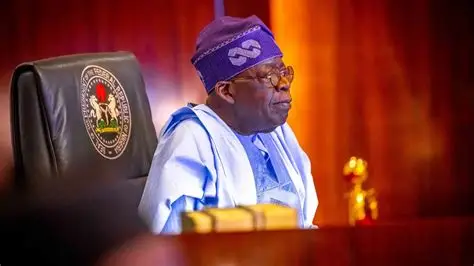
President Bola Ahmed Tinubu has found himself at the centre of a fresh diplomatic dispute after comments about Nigeria’s worsening security situation drew a strong response from the Alliance of Sahel States, known as the AES. The bloc, made up of Burkina Faso, Mali, and Niger, has criticised the Nigerian president over remarks it says linked insecurity in Nigeria to developments and nationals from the three countries.
The exchange has added another layer to an already complicated relationship between Nigeria and the Sahel bloc, coming at a time when terrorism, banditry, and other security threats continue to affect several West African countries. With the comments now generating reactions across the region, attention has turned to what Tinubu said, why the AES objected, and what the disagreement could mean for relations between Nigeria and its Sahel neighbours.
What Did Tinubu Say About Nigeria’s Insecurity?
Tinubu recently linked some of Nigeria’s security challenges to the wider instability affecting the Sahel region. He specifically pointed to nationals from Mali, Niger and Burkina Faso as contributing to the insecurity facing Nigeria, while also stressing the need for stronger measures to address the country’s security problems.
His comments reflect a broader concern about the movement of extremist groups, criminal networks and weapons across porous borders in West Africa. Nigeria shares borders with Niger and has longstanding security connections with the wider Sahel, meaning instability in neighbouring countries can have consequences for communities and security agencies within Nigeria.
The remarks, however, have not been accepted by the governments of the three AES countries. Their response has turned what was initially a discussion about Nigeria’s security challenges into a wider diplomatic disagreement involving regional cooperation and responsibility for insecurity.
How Did the Sahel Alliance Respond?
The Alliance of Sahel States strongly rejected the interpretation of the Nigerian president’s comments. The bloc expressed dismay over statements it considered inaccurate and dismissive of the security efforts being made by Burkina Faso, Mali and Niger.
The three countries also summoned Nigeria’s chargé d’affaires in Ouagadougou over the remarks. Their reaction shows that the disagreement has moved beyond public statements and into the diplomatic sphere.
The AES countries argue that they are themselves dealing with serious terrorist threats and have been conducting operations against armed groups within their territories. Their position is that the security crisis affecting West Africa should be addressed through cooperation rather than by placing responsibility on neighbouring states.
Why Is the Sahel Alliance Important to Nigeria?
The AES has become an increasingly important political and security bloc in West Africa. Burkina Faso, Mali and Niger left the Economic Community of West African States after disagreements with the regional organisation, particularly over sanctions, military governments and the bloc’s approach to the political crises in those countries.
Their departure created a new regional dynamic in which Nigeria, as one of the leading members of ECOWAS, has increasingly had to manage relations with governments that no longer belong to the bloc. The current disagreement over insecurity adds another layer to those already complicated relations.
For Nigeria, the issue is especially important because insecurity does not stop at national borders. Armed groups operating in the Sahel can exploit weak border controls and remote areas, while criminal networks can move people, weapons and other resources across countries.
What Does the Dispute Mean for Nigeria?
The disagreement highlights the difficulty of addressing insecurity in West Africa without regional cooperation. Nigeria faces serious security threats of its own, including terrorism, banditry, kidnapping and communal violence, while its northern neighbours face their own challenges involving extremist organisations and armed groups.
A breakdown in trust between Nigeria and the AES could make regional security cooperation more difficult. At the same time, the dispute could encourage both sides to clarify their positions and explore areas where cooperation remains possible despite their political differences.
Nigeria has previously expressed its willingness to maintain dialogue with countries in the Sahel, even after their withdrawal from ECOWAS. The latest exchange therefore represents tension within a relationship that remains strategically important to the wider region.
Who Is Bola Tinubu?
Bola Ahmed Tinubu is the President of Nigeria and one of the country’s most influential political figures. Before becoming president, he served as the governor of Lagos State and played a major role in building the political structure that eventually developed into one of Nigeria’s strongest political networks.
He emerged as the presidential candidate of the All Progressives Congress for the 2023 election and won the contest, succeeding Muhammadu Buhari as president. His political career spans several decades and includes experience in both elected office and party organisation.
How Old Is Bola Tinubu?
Bola Tinubu was born on March 29, 1952, making him 74 years old in 2026. He was born in what is now Lagos State and later spent part of his early adult life in the United States before returning to Nigeria and entering politics.
His age has remained a topic of public discussion throughout his political career, particularly during presidential elections. However, his long political experience has also been one of the factors frequently highlighted by supporters when discussing his suitability for national leadership.
Where Is Bola Tinubu From?
Tinubu is from Lagos State, Nigeria, and has strong political roots in the state. His political career became closely associated with Lagos after he returned to Nigeria and became involved in politics during the period of democratic transition in the 1990s.
His influence in Lagos expanded significantly during and after his time as governor. The political structure associated with him in the state later became an important part of his influence within Nigerian national politics.
What Did Tinubu Study?
Tinubu studied Accounting in the United States. He attended Chicago State University, where he obtained a degree in accounting.
Before entering Nigerian politics, he worked in the United States and gained experience in the financial sector. His background in accounting and business later became part of his public profile, particularly during his political career in Lagos.
How Did Tinubu Start His Political Career?
His political career became prominent during Nigeria’s return to democratic rule in the 1990s. He was elected as a senator representing the Lagos West constituency in the short-lived Third Republic. After the military takeover that ended the Third Republic, he remained involved in pro-democracy activities. He later returned to electoral politics and won the Lagos State governorship election in 1999.
His tenure as governor from 1999 to 2007 became one of the defining periods of his political career and helped establish the influence he would later carry into national politics.
Tinubu’s Career as Lagos Governor
Tinubu served as Lagos State governor between 1999 and 2007. During his administration, the state pursued reforms involving taxation, transportation, urban development and public administration.
His supporters often point to the expansion of Lagos’s internally generated revenue and reforms in government administration as major achievements of the period. Critics, however, have also raised questions about the political influence and structures associated with his administration. Regardless of those competing assessments, his time in office established him as one of Nigeria’s most influential political figures and laid the groundwork for his later national ambitions.
How Did Tinubu Become President?
Tinubu secured the presidential ticket of the All Progressives Congress ahead of the 2023 election after defeating several prominent contenders at the party’s primary. He went on to win the presidential election, defeating Atiku Abubakar of the Peoples Democratic Party and Peter Obi of the Labour Party. He was sworn in as Nigeria’s president on May 29, 2023.
His administration has since focused on economic reforms, security, infrastructure and efforts to attract investment. Some of the policies introduced by his government have generated significant debate because of their effects on households and businesses.
What Are Tinubu’s Major Policies?
One of the most significant decisions of his administration was the removal of the petrol subsidy shortly after he took office. The government argued that the policy had become financially unsustainable and that removing it would allow resources to be redirected toward other areas of the economy.
His administration has also pursued reforms in the foreign exchange market, taxation, investment and energy. These measures have been accompanied by efforts to attract private investment and improve government revenue.
The economic reforms have produced both support and criticism. Supporters argue that they are necessary to address structural problems, while critics have focused on the immediate pressure that rising prices and living costs have placed on Nigerians.
Tinubu and Nigeria’s Security Challenges
Security remains one of the most important issues facing the Tinubu administration. Nigeria continues to deal with terrorism in the northeast, banditry and kidnapping in parts of the northwest and north-central regions, as well as other forms of criminal violence.
The government has responded by increasing military and security operations while also discussing broader reforms to Nigeria’s security architecture. Tinubu has repeatedly called for stronger coordination between security agencies and greater efforts to prevent criminals from operating across borders.
His latest comments about the role of Sahel countries in Nigeria’s insecurity have now brought the regional dimension of the security crisis into sharper focus.
What Is Tinubu’s Net Worth?
Tinubu’s exact current net worth is not publicly verified. Various websites and online publications have published different estimates over the years, but there is no independently established figure that can be treated as an authoritative measure of his wealth.
His known public career includes extensive involvement in politics and business before he became president. However, estimated figures circulating online should not be presented as confirmed financial information.
Who Is Tinubu’s Wife?
Bola Tinubu is married to Oluremi Tinubu, who is also a prominent Nigerian political figure. She served as a senator representing Lagos Central before becoming Nigeria’s First Lady following her husband’s election as president.
Oluremi Tinubu has also pursued programmes focused on education, women and youth empowerment and other social issues through initiatives associated with her office.
Does Bola Tinubu Have Children?
Tinubu and his wife have children, although the family has experienced significant public attention over the years. Some of his children have remained involved in business and other professional activities, while others have maintained a relatively private profile.
The president’s family life has occasionally become part of Nigerian political discussions, but much of the family’s personal affairs remains separate from his official responsibilities as president.
Tinubu’s Role in Nigeria’s 2027 Politics
Although the next presidential election is still ahead, Tinubu remains central to discussions about Nigeria’s political future. His administration’s performance on the economy, security and governance is expected to influence the political environment leading into 2027.
The president’s political structure and the strength of the ruling party will also be important factors. At the same time, opposition parties and political figures are working to build alliances that could challenge the governing party in the next election cycle.
Why Does the Latest AES Dispute Matter?
The latest disagreement matters because Nigeria cannot completely separate its domestic security challenges from developments in the wider Sahel. The countries involved share borders, communities, trade routes and security concerns, making cooperation strategically important.
At the same time, the AES governments have made clear that they do not want their countries portrayed as responsible for Nigeria’s internal security failures. Their response to Tinubu’s remarks shows how sensitive the issue has become. The diplomatic disagreement therefore goes beyond a single exchange of comments. It reflects wider tensions over how West African countries should cooperate on terrorism, border security and regional stability.
What Happens Next?
The immediate focus will likely be on how Nigeria manages its diplomatic relationship with Burkina Faso, Mali and Niger following the AES response. While the disagreement has become public, there remains a strong practical interest on all sides in preventing insecurity from spreading across national borders.
Nigeria will also face pressure to address its domestic security challenges directly. Regional factors may contribute to insecurity, but the government remains responsible for protecting communities within the country’s borders. The dispute could ultimately encourage greater dialogue among the countries involved, particularly if all sides recognise that terrorism and organised crime pose a shared regional threat.
Conclusion
Bola Tinubu is receiving fresh attention after his comments about Nigeria’s security challenges triggered a strong response from the Alliance of Sahel States, comprising Burkina Faso, Mali and Niger. The three countries rejected the suggestion that their citizens and instability within the Sahel should be blamed for Nigeria’s worsening security situation and summoned Nigeria’s chargé d’affaires over the remarks.
The dispute comes at a sensitive time for West Africa, where terrorism, banditry and cross-border criminal activity continue to affect several countries. For Nigeria, the challenge is not only to strengthen its domestic security response but also to maintain working relationships with neighbouring states despite growing political differences.
Tinubu’s long political career, from his early involvement in Nigerian politics to his years as Lagos governor and eventual election as president, has made him one of the country’s most influential political figures. The latest controversy adds another chapter to his presidency as his administration continues to confront the security challenges facing Nigeria.
Read More: Jung Jun Won Biography: Age, Career, Relationship and Latest News
Frequently Asked Questions
Why is Tinubu in the news?
Tinubu is receiving fresh attention after comments he made about Nigeria’s insecurity triggered a response from the Alliance of Sahel States.
What is the Sahel Alliance?
The Alliance of Sahel States, also known as AES, is a regional bloc comprising Burkina Faso, Mali and Niger.
Why did the Sahel Alliance respond to Tinubu?
The bloc objected to remarks linking insecurity in Nigeria to nationals and instability from the three Sahel countries. The governments involved considered the comments inaccurate and dismissive of their own security efforts.
Did the AES summon a Nigerian diplomat?
Yes. The AES countries summoned Nigeria’s chargé d’affaires in Ouagadougou following the comments.
How old is Bola Tinubu?
Bola Tinubu was born on March 29, 1952, making him 74 years old in 2026.
Where is Bola Tinubu from?
He is from Lagos State, Nigeria.
What did Bola Tinubu study?
He studied Accounting at Chicago State University in the United States.
When did Tinubu become president?
He was sworn in as President of Nigeria on May 29, 2023.
Who is Bola Tinubu’s wife?
His wife is Oluremi Tinubu, a former senator who became Nigeria’s First Lady after his election as president.
What is Tinubu’s net worth?
His exact current net worth has not been independently verified. Online estimates vary and should not be treated as confirmed figures.
What are Tinubu’s major challenges as president?
His administration has faced major challenges involving insecurity, inflation, economic reforms, unemployment, public welfare and political tensions.