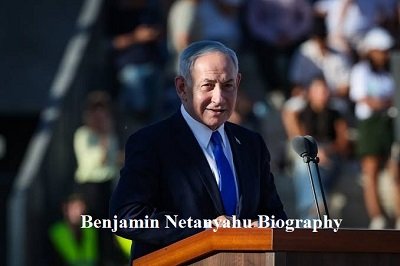
Benjamin Netanyahu biography: Few living political leaders have shaped their country’s trajectory as continuously as Benjamin Netanyahu has shaped Israel’s. Across more than two decades in and out of the prime minister’s office, he has become the country’s longest serving leader, a status matched by an equally long list of controversies, military conflicts, and legal proceedings that continue to unfold as of 2026. This is a factual account of his life, career, and the major events currently surrounding his leadership, presented without taking a position on the deeply contested debates that surround much of his record.
Benjamin Netanyahu Age and Early Life
Benjamin “Bibi” Netanyahu was born on October 21, 1949, in Tel Aviv, Israel, making him 76 years old as of 2026. He was raised in Jerusalem, the middle of three sons born to historian Benzion Netanyahu and Tzila Netanyahu. His family lived in the United States on two separate occasions during his childhood and teenage years, including a stretch in Cheltenham Township, Pennsylvania, while his father held a teaching position at Dropsie College, and later in the Philadelphia area when his father took a position in 1963. Netanyahu graduated from Cheltenham High School in 1967, where he was active in the debate club, chess club, and soccer team.
When tensions rose ahead of the Six-Day War in 1967, Netanyahu took his high school exams early and returned to Israel to enlist in the Israel Defense Forces. He trained as a combat soldier and served roughly five years in Sayeret Matkal, an elite special forces unit, taking part in numerous cross border operations during this period, including the 1968 Battle of Karameh. In 1972, he took part in the high profile rescue of hostages aboard a hijacked Sabena airliner at Tel Aviv airport, an operation for which he was cited for outstanding command by a senior IDF general.
Education and Early Career in the United States
After his discharge from the IDF in 1972, Netanyahu briefly returned to civilian life before being called back to serve in the 1973 Yom Kippur War. He then resumed his studies at the Massachusetts Institute of Technology, earning a bachelor’s degree in architecture and a master’s degree in business management, while also studying political science at MIT and Harvard. Following his graduation, he worked for the Boston Consulting Group and later became a marketing manager for a furniture retailer in Boston.
In July 1976, his older brother, Yonatan Netanyahu, was killed while leading the Israeli raid that rescued hostages from a hijacked plane at Entebbe Airport in Uganda. In his brother’s memory, Netanyahu founded the Jonathan Institute, an organization that sponsored international conferences on terrorism. Through his work with the institute, he became acquainted with senior Likud party figures, including Moshe Arens, who recruited him as deputy chief of mission at the Israeli embassy in Washington in 1982.
Rise Through Israeli Politics
Netanyahu served as Israel’s ambassador to the United Nations from 1984 to 1988, a role in which he led a campaign to declassify United Nations archives related to Nazi war crimes. In 1988, he was elected to the Knesset, Israel’s parliament, as a member of the Likud party, and went on to serve as deputy minister of foreign affairs and later as a deputy minister in Prime Minister Yitzhak Shamir’s cabinet.
In 1993, Netanyahu was elected chairman of the Likud party, succeeding Yitzhak Shamir and becoming leader of the opposition. Three years later, in 1996, he was elected prime minister of Israel for the first time, narrowly defeating incumbent Shimon Peres. During that term, which ran until 1999, he signed the Hebron and Wye River agreements, advancing elements of the peace process with the Palestinians at the time. He lost the 1999 election to Ehud Barak, his former military commander, and subsequently resigned from the Knesset, spending several years in the private sector and on the public lecture circuit before returning to politics in 2002 as foreign minister and later finance minister.
Second and Third Terms as Prime Minister
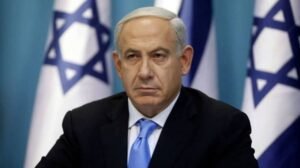
Netanyahu was sworn in as prime minister for a second time on March 31, 2009, forming a national unity government. During a notable 2009 address at Bar-Ilan University, he stated a conditional openness to a demilitarized Palestinian state, provided it recognized Israel as a Jewish state. His relationship with the Obama administration in the United States grew strained over various issues, most notably his strong public opposition to the 2015 nuclear agreement between world powers and Iran, which he called a historic mistake.
His government’s approach to Gaza during this period drew international scrutiny on multiple occasions, including during a major escalation of conflict with Hamas in the summer of 2014 that resulted in significant Israeli military operations in the territory and substantial civilian casualties, generating considerable international criticism at the time.
Netanyahu was sworn in for a fifth term on May 17, 2020, in coalition with Benny Gantz, governing against the backdrop of the COVID-19 pandemic in Israel. During this period, sustained protests took place outside the prime minister’s residence, with demonstrators citing opposition to his leadership and demands for accountability tied to his then newly launched corruption trial.
The Ongoing Corruption Trial
In November 2019, Netanyahu was indicted on charges of bribery, fraud, and breach of trust, becoming the first sitting Israeli prime minister to face criminal charges while in office. The case, which formally began in 2020, consolidates three separate matters generally referred to as Case 1000, Case 2000, and Case 4000.
Case 1000 centers on allegations that Netanyahu received gifts, including cigars and champagne valued at roughly 700,000 shekels, from billionaire associates including Hollywood producer Arnon Milchan and Australian businessman James Packer, in exchange for political favors. Case 4000, widely regarded by legal observers as the most serious of the three because it includes the bribery charge, involves allegations concerning Netanyahu’s relationship with Shaul Elovitch, the controlling shareholder of telecom company Bezeq, and a merger involving the Yes satellite television service.
Netanyahu has pleaded not guilty to all charges and has consistently described the case as a politically motivated effort by opponents unable to defeat him at the ballot box. He began testifying in his own defense in December 2024, and cross-examination by prosecutors began in June 2025, continuing intermittently through periods of regional conflict that repeatedly paused court proceedings. His direct testimony concluded on June 24, 2026, following what court records describe as 98 hearings, though he remained subject to further questioning from attorneys representing his co-defendants.
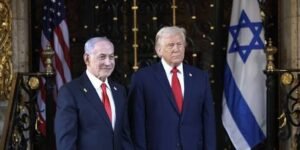
In November 2025, Netanyahu formally requested a pardon from Israeli President Isaac Herzog, a request that, if granted before any conviction, would be without precedent in Israeli legal history. United States President Donald Trump publicly and repeatedly called for Netanyahu’s trial to be cancelled or for a pardon to be issued, including in a Knesset address and a subsequent letter to Herzog. As of mid-2026, Herzog had not granted the pardon request, instead calling for renewed plea deal discussions between Netanyahu’s legal team and the Israeli Attorney General, while opposition leader Yair Lapid stated publicly that any pardon should require an admission of guilt, an expression of remorse, and Netanyahu’s retirement from public life. Netanyahu’s legal team has not agreed to those terms.
Regional Conflicts During Netanyahu’s Current Term
Netanyahu’s current term as prime minister, which began in December 2022, has coincided with an extended period of regional conflict. Following the Hamas attack on Israel in October 2023, his government conducted an extended military campaign in Gaza. That campaign led to a case being brought before the International Court of Justice by South Africa, alleging genocide, an allegation Israel has firmly and consistently rejected, describing its military operations as acts of self defense against a designated terrorist organization. In November 2024, the International Criminal Court issued an arrest warrant for Netanyahu in connection with alleged war crimes and crimes against humanity tied to the Gaza campaign, a determination Netanyahu and the Israeli government have rejected, describing the court’s actions as lacking legitimate jurisdiction over Israel. Both the ICJ case and the ICC warrant remain unresolved and continue to be the subject of sharp international disagreement.
In October 2024, Netanyahu survived an assassination attempt and subsequently ordered an invasion of Lebanon aimed at the military capabilities of Hezbollah, a Hamas ally. Following the collapse of the Assad government in Syria in December 2024, his government directed military action inside Syrian territory as well. In 2025, Israel conducted strikes on Iran that initiated a conflict referred to in some reporting as the Twelve-Day War, and in February 2026, Israel launched a further air campaign against Iran alongside the United States, with the stated objective of regime change. According to multiple diplomatic sources, Netanyahu lobbied US President Trump to support the joint operation. A further escalation with Hezbollah followed in March 2026, accompanied by a second Israeli incursion into Lebanon.
These ongoing conflicts have drawn sharply divided international reactions. Supporters of Netanyahu’s approach frame the operations as necessary responses to existential security threats from Iran and its regional allies, while critics, including various international bodies and foreign governments, have raised concerns about civilian casualties, regional escalation, and the broader humanitarian toll of the wars. Both perspectives remain part of an active and unresolved global debate.
Domestic Political Developments
In December 2025, under Netanyahu’s premiership, Israel became the first country to formally recognize Somaliland, a breakaway region of Somalia, as an independent state. In March 2026, after Israeli prosecutors dropped charges against soldiers accused of abuse at a military detention facility, Netanyahu publicly stated that Israel must pursue its enemies rather than its fighters, a remark that drew support from parts of his political base and criticism from human rights organizations concerned about military accountability.
Domestically, Netanyahu’s tenure has also been associated with a controversial 2023 judicial reform package that sought to significantly curtail the power of Israel’s Supreme Court, sparking mass protests across the country before Israel’s Supreme Court struck down the most significant provision of the plan in January 2024. Critics, including various Israeli civil society organizations, have argued aspects of his government’s actions during this period weakened democratic checks and balances, while Netanyahu and his allies have defended the reforms as a necessary rebalancing of power between elected officials and a judiciary they describe as overly political. This remains one of the most actively contested debates in current Israeli politics.
In February 2026, Israeli authorities also opened an investigation into the leak of classified government documents to a German newspaper, summoning Netanyahu to explain to police, after his chief of staff was separately arrested on suspicion of attempting to impede that investigation.
Personal Life
Netanyahu has been married three times. He is currently married to Sara Netanyahu, whom he wed in 1991. Sara, born in November 1958 in the Israeli town of Tivon, is the daughter of a noted Israeli educator and writer. The couple has two sons, Yair and Avner. Netanyahu also has a daughter, Noa, from his first marriage.
Frequently Asked Questions
How old is Benjamin Netanyahu? He was born on October 21, 1949, making him 76 years old as of 2026.
How many times has Netanyahu served as Israel’s prime minister? He has served three separate terms, from 1996 to 1999, 2009 to 2021, and from December 2022 to the present, making him Israel’s longest serving prime minister.
What is Netanyahu’s corruption trial about? He faces charges of bribery, fraud, and breach of trust across three consolidated cases involving allegations of receiving improper gifts and favors in exchange for political influence. He denies all charges.
Has Netanyahu been pardoned in his corruption case? As of mid-2026, no pardon had been granted. He formally requested one in November 2025, and discussions involving Israel’s president and possible plea negotiations were ongoing.
Why did the International Criminal Court issue an arrest warrant for Netanyahu? The ICC issued the warrant in November 2024 in connection with alleged war crimes and crimes against humanity tied to Israel’s military campaign in Gaza, an allegation Netanyahu and the Israeli government strongly reject.
Is Netanyahu married? Yes, he is married to Sara Netanyahu, and the couple has two sons together.
Conclusion
Benjamin Netanyahu’s career reflects one of the most consequential and contested political trajectories of the modern era, spanning military service, decades of elected leadership, and a series of legal and military developments that remain fiercely debated both within Israel and around the world. As his corruption trial continues alongside ongoing regional conflicts and an approaching general election in October 2026, his political future, much like much of the record already behind him, remains a subject of deep and unresolved disagreement among observers across the political spectrum.