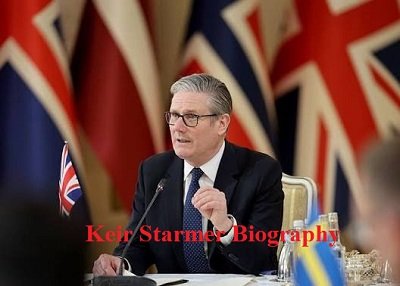
Keir Starmer biography: Few political careers have moved from landslide victory to resignation as quickly as Keir Starmer’s. Elected Prime Minister of the United Kingdom in July 2024 after leading the Labour Party to its largest parliamentary majority in decades, he announced less than two years later, in June 2026, that he would step down as both Prime Minister and Labour leader. His story, from a working class upbringing in Surrey to one of the most demanding legal careers in British human rights law and finally to Downing Street, is worth understanding in full, alongside the events that brought his premiership to an early close.
Keir Starmer Age and Early Life
Sir Keir Rodney Starmer was born on September 2, 1962, in Southwark, south east London, and raised in Oxted, Surrey, making him 63 years old as of 2026. He is the second of four children born to Rodney Starmer, who worked as a toolmaker in a factory, and Josephine Starmer, a nurse. He was named Keir after James Keir Hardie, the first parliamentary leader of the Labour Party, reflecting his family’s longstanding ties to the labour movement.
Starmer’s childhood was shaped significantly by his mother’s health. Josephine Starmer developed Still’s disease, a rare and severe form of inflammatory arthritis, and Starmer has spoken about spending much of his early years watching her go in and out of hospital, with his father remaining constantly by her side. He has cited his mother’s courage in living with the illness as a significant influence on his character and outlook. Starmer attended Reigate Grammar School, a selective state school that became a private institution during his time there, and was among the first in his family to attend university.
Education and Legal Career
Starmer graduated from the University of Leeds with a Bachelor of Laws degree in 1985, before completing a postgraduate Bachelor of Civil Law degree at St Edmund Hall, Oxford. He was called to the Bar at Middle Temple in 1987 and began a long legal career focused primarily on human rights and criminal defence work.
In 1990, Starmer co-founded Doughty Street Chambers, which became one of London’s leading human rights focused legal practices, and he served as its joint head beginning in 2002. His legal work over the following decades was extensive and often high profile. He defended environmental activists Helen Steel and David Morris in the prolonged McLibel case against McDonald’s, both in the English courts and before the European Court of Human Rights. He was called to the Bar in several Caribbean countries, where he represented convicts sentenced to the death penalty, work that earned him the Bar Council’s Sydney Elland Goldsmith award in 2005 for his pro bono contributions to challenging the death penalty across the Caribbean, Uganda, Kenya, and Malawi.
He also wrote legal opinions and took part in protests against the 2003 invasion of Iraq, later stating his view that the war had not been lawful under international law due to the absence of an authorizing United Nations resolution. He served as a human rights adviser to the Northern Ireland Policing Board from 2003 to 2008, an experience he has described as a significant factor in his eventual decision to enter politics. Starmer was appointed Queen’s Counsel in 2002 at age 39 and was named QC of the Year by Chambers and Partners in 2007.
Director of Public Prosecutions
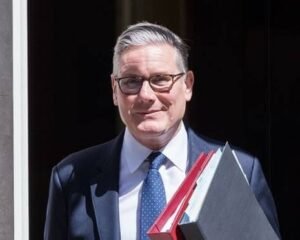
In 2008, Starmer was appointed Director of Public Prosecutions and head of the Crown Prosecution Service, a position he held until 2013. His tenure included several high profile and sometimes controversial decisions. He oversaw the successful prosecution of two of Stephen Lawrence’s murderers following a renewed case in 2010, and in 2010 he announced the decision to prosecute three Labour Members of Parliament and one Conservative peer in connection with the parliamentary expenses scandal, all of whom were subsequently found guilty.
Other decisions during his tenure drew significant public scrutiny, including the initial decision not to prosecute officers involved in the death of Ian Tomlinson during the 2009 G20 protests, a decision he later reversed after an inquest found Tomlinson had been unlawfully killed. He also introduced reforms aimed at modernizing the Crown Prosecution Service, including early moves toward paperless hearings. He was knighted in the 2014 New Year Honours for his services to law and criminal justice.
Entering Politics
Starmer was elected as the Labour Member of Parliament for Holborn and St Pancras in 2015, entering the House of Commons at age 52, relatively late compared to many career politicians. He served as Shadow Immigration Minister and later as Shadow Secretary of State for Exiting the European Union under Labour leader Jeremy Corbyn.
Following Labour’s defeat in the 2019 general election and Corbyn’s resignation, Starmer stood for the Labour leadership, pledging to unite the party while retaining what he described as the radicalism of recent years, alongside a commitment to addressing antisemitism within Labour’s ranks. He won the leadership contest decisively in April 2020, securing 56.2 percent of the vote in the first round, and served as Leader of the Opposition until 2024.
Becoming Prime Minister
Under Starmer’s leadership, the Labour Party won a landslide victory in the July 4, 2024 general election, ending fourteen years of Conservative government and making him the first Labour Prime Minister since Gordon Brown in 2010. He was appointed Prime Minister, First Lord of the Treasury, and Minister for the Civil Service by King Charles III on July 5, 2024, becoming the first incoming Prime Minister to hold a knighthood since Alec Douglas-Home. In his first speech as Prime Minister, Starmer notably praised his predecessor, Rishi Sunak, describing his significance as Britain’s first British Asian Prime Minister.
His cabinet included a record number of women, including Rachel Reeves as the first female Chancellor of the Exchequer in British history, and Angela Rayner as Deputy Prime Minister.
Domestic Challenges and Falling Approval
Starmer’s premiership was marked from an early stage by a series of difficult domestic policy decisions and a prolonged cost of living crisis. Controversies during his time in office included the decision to limit Winter Fuel Payments for pensioners, a row over personal donations and gifts he had received, an increase in employer national insurance contributions, and changes to inheritance tax rules affecting farmers. In May 2025, his government’s proposed cuts to disability benefits prompted dozens of Labour MPs to publicly oppose the legislation, and a significantly scaled back version of the bill ultimately passed with 49 Labour MPs still voting against it.
His approval ratings declined steadily and significantly over the course of his premiership. According to Ipsos polling, his net approval fell from a slightly positive starting point to an average of around minus 46 percent by November 2025, with the polling organization describing him as the least popular prime minister since its records began in 1977. By January 2026, YouGov polling indicated roughly 75 percent of the public held an unfavorable view of him.
In September 2025, Deputy Prime Minister Angela Rayner resigned following a tax related controversy, a development widely described as a significant blow to Starmer’s leadership. A further crisis emerged around his appointment of Peter Mandelson as British ambassador to the United States in December 2024. Starmer dismissed Mandelson in September 2025 over associations that came to light, later stating he regretted the appointment, and Mandelson was subsequently removed from the Privy Council. The fallout from this episode led to the resignation of Starmer’s Chief of Staff, Morgan McSweeney, and his Director of Communications, Tim Allan, in early February 2026, with reports later indicating Mandelson had in fact failed required security vetting for the ambassadorial role.
Foreign Policy and International Conflicts
Starmer’s foreign policy approach during his premiership included a formal recognition of the State of Palestine by his government in September 2025. He maintained that the UK recognized Israel’s right to self defence following the 2025 Israeli strikes on Iran, while also stressing the need for de-escalation, a position he reiterated directly to Israeli Prime Minister Benjamin Netanyahu.
When the 2026 Iran war began in February 2026, Starmer declined to have the United Kingdom directly join the conflict, citing concerns over international law and a stated desire to avoid repeating what he characterized as the strategic mistakes of the Iraq War, though UK forces did shoot down Iranian drones and missiles over allied countries in the region. He also declined a request from US President Donald Trump to use British military bases for the operation, while publicly criticizing opposition leaders Nigel Farage and Kemi Badenoch for their immediate support of the war.
In May 2025, Starmer defended his government’s agreement to return the Chagos Archipelago to Mauritius before the House of Commons, a deal that included continued provisions for the British and American military base located on the territory.
The 2026 Leadership Crisis and Resignation
The most consequential period of Starmer’s premiership unfolded in 2026. At the local elections held on May 7, 2026, Labour lost control of 35 councils and roughly 1,500 council seats, with the party’s projected national vote share falling to around 17 percent, a result widely interpreted as a direct rejection of his leadership. Reform UK, led by Nigel Farage, made significant gains in the same elections, while nationalist parties also performed strongly, with Plaid Cymru ending a century of Labour dominance in Wales and the Scottish National Party becoming the largest party in the Scottish Parliament.
Following the results, Health Secretary Wes Streeting resigned on May 14, 2026, and Labour MP Josh Simons resigned his seat the same day specifically to allow Andy Burnham, then Mayor of Greater Manchester, to contest a by-election and re-enter Parliament. On June 11, 2026, Defence Secretary John Healey and junior minister Al Carns resigned over disagreements regarding limited defence spending increases in a planned Defence Investment Plan. Burnham went on to win the Makerfield by-election on June 18, 2026, with a substantial majority, positioning himself to formally challenge Starmer for the Labour leadership.
On June 22, 2026, days after Burnham’s return to Parliament, Keir Starmer announced his resignation as both Prime Minister and Leader of the Labour Party. He is set to remain in office in a caretaker capacity until the conclusion of the Labour Party’s leadership election, with nominations expected to open on July 9, 2026, and a new leader to be selected by mid-September if the contest is formally contested. Burnham has confirmed he will stand in the race, while Streeting has stated he will not.
Personal Life
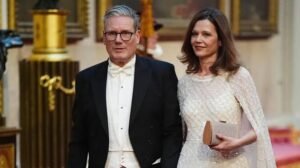
Starmer met his wife, Victoria, a solicitor, in the early 2000s while working on a shared case as a senior barrister. The couple became engaged in 2004 and married in May 2007. They have two children, both of whom Starmer and his wife have generally kept out of public media coverage in order to protect their privacy. Starmer has described himself as a pescatarian, while his wife is a vegetarian, and the couple raised their children as vegetarians until each turned ten, after which they were given the choice of whether to eat meat. He has stated that his faith background is Christian, though he has also described himself as agnostic in some interviews and has spoken about the unifying power of faith more broadly rather than emphasizing personal religious belief.
In 2026, two foreign nationals were convicted at the Old Bailey for conspiring to carry out arson attacks targeting a property and a vehicle connected to the Starmer family, an incident that underscored the security concerns that have accompanied his time in office.
Frequently Asked Questions
How old is Keir Starmer? He was born on September 2, 1962, making him 63 years old as of 2026.
When did Keir Starmer become Prime Minister? He was appointed Prime Minister on July 5, 2024, following Labour’s landslide general election victory.
Why did Keir Starmer resign as Prime Minister? He announced his resignation on June 22, 2026, following a sustained period of historically low approval ratings, poor local election results in May 2026, and mounting internal pressure from within the Labour Party, including the return of Andy Burnham to Parliament as a potential leadership challenger.
Is Keir Starmer still Prime Minister? As of his resignation announcement, he remains in office in a caretaker capacity until a new Labour leader is selected, with the leadership contest expected to conclude by mid-September 2026.
What was Keir Starmer’s career before politics? He was a barrister specializing in human rights and criminal defence law, later serving as Director of Public Prosecutions and head of the Crown Prosecution Service from 2008 to 2013.
Is Keir Starmer married? Yes, he is married to Victoria Starmer, a solicitor, and the couple has two children.
Conclusion
Keir Starmer’s path from a modest upbringing in Surrey to one of the most demanding human rights legal careers in Britain and eventually to the office of Prime Minister, reflects a genuinely unusual trajectory for a modern political leader. Yet his premiership, despite beginning with a historic electoral mandate, proved to be one of the shortest and most turbulent in recent British political history, undone by a combination of sustained unpopularity, internal party dissent, and a series of damaging controversies. As the Labour Party now moves toward selecting his successor, his legacy and the lessons drawn from his rapid rise and equally rapid departure are likely to be debated within British politics for some time to come.